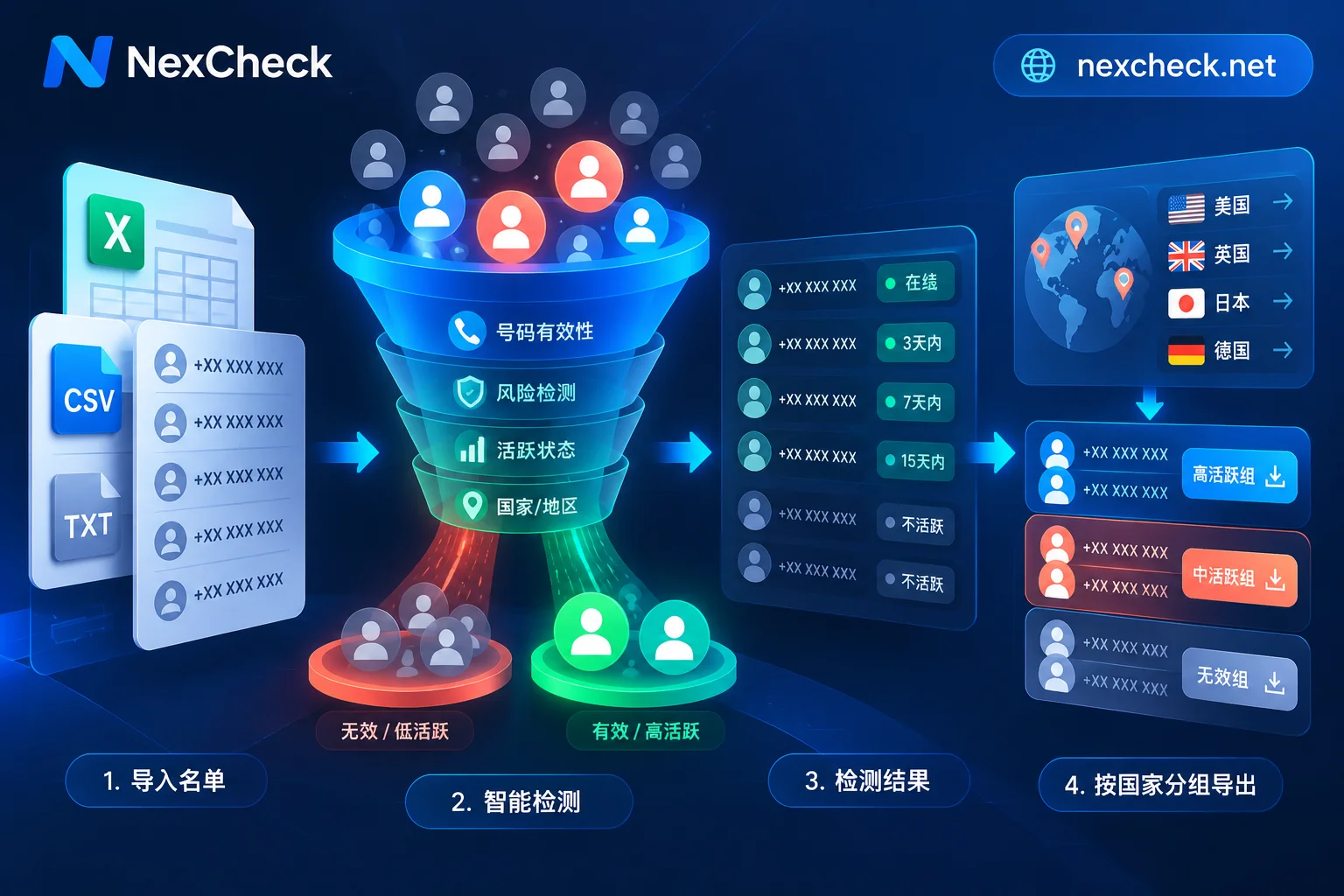
 NexCheck-筛号平台
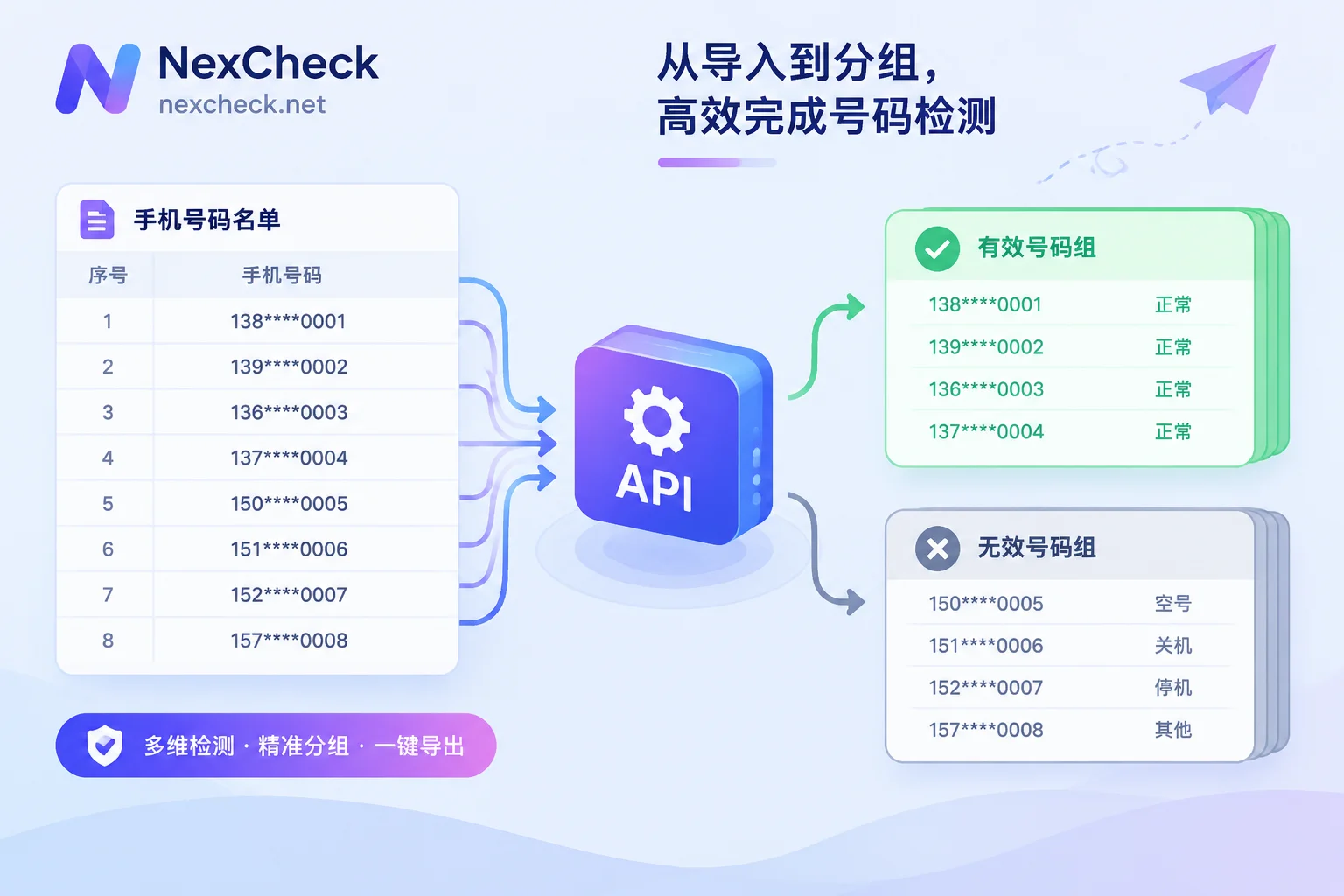
How to Integrate a Telegram Number Screening API: List Cleaning, Asynchronous Submission, Result Fields, and CRM Write-Back
A step-by-step guide to integrating a Telegram number screening API: clean phone numbers to E.164, submit in batches by country, receive results via Webhook, and write back to CRM by valid and invalid groups.
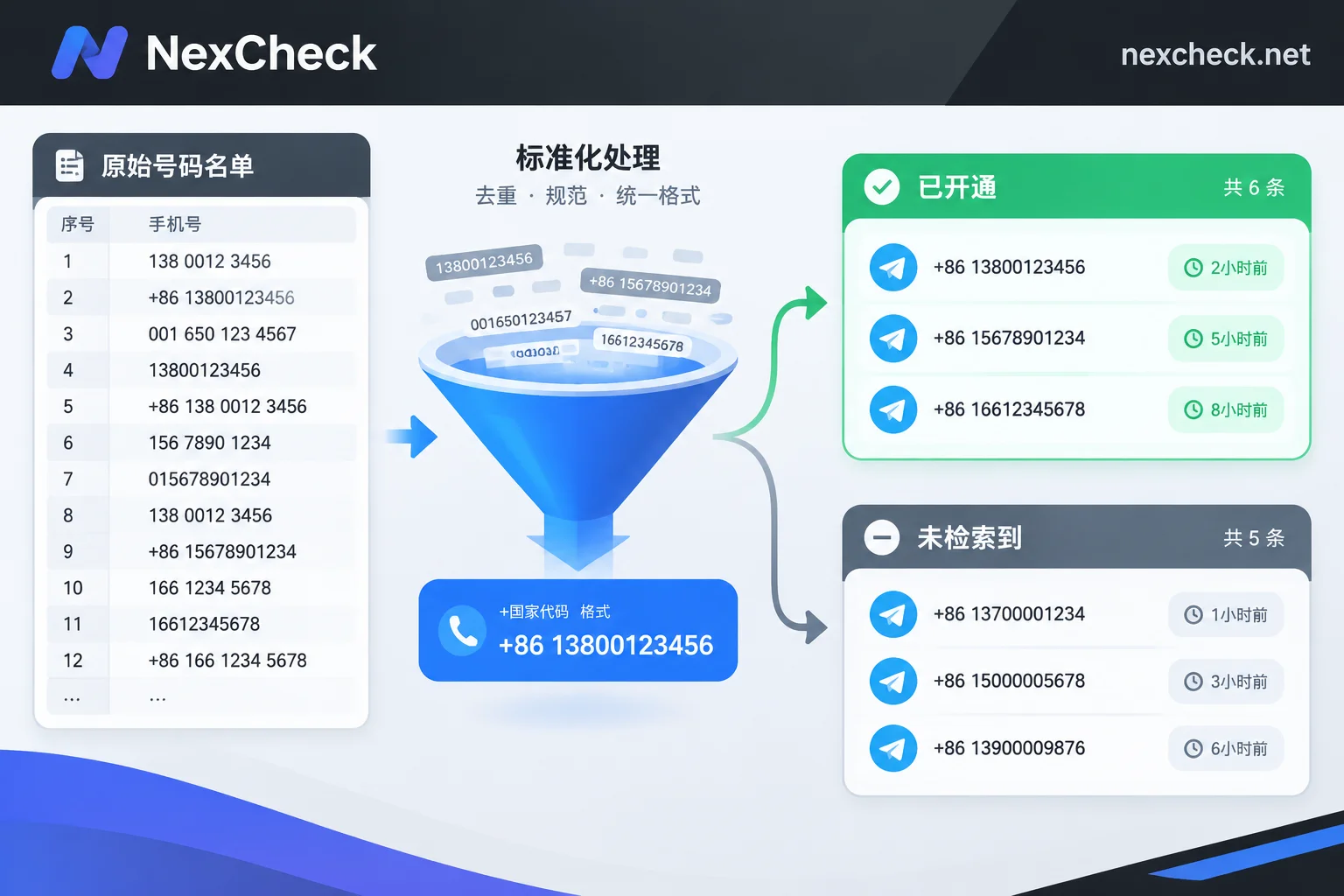
Telegram Number Screening: List Cleaning Order, Online Status Fields, and Privacy Boundaries
A practical guide to screening a phone number list against Telegram: normalize to E.164, deduplicate, split by country, interpret the four fuzzy Last seen ranges, and write grouped results back to CRM.
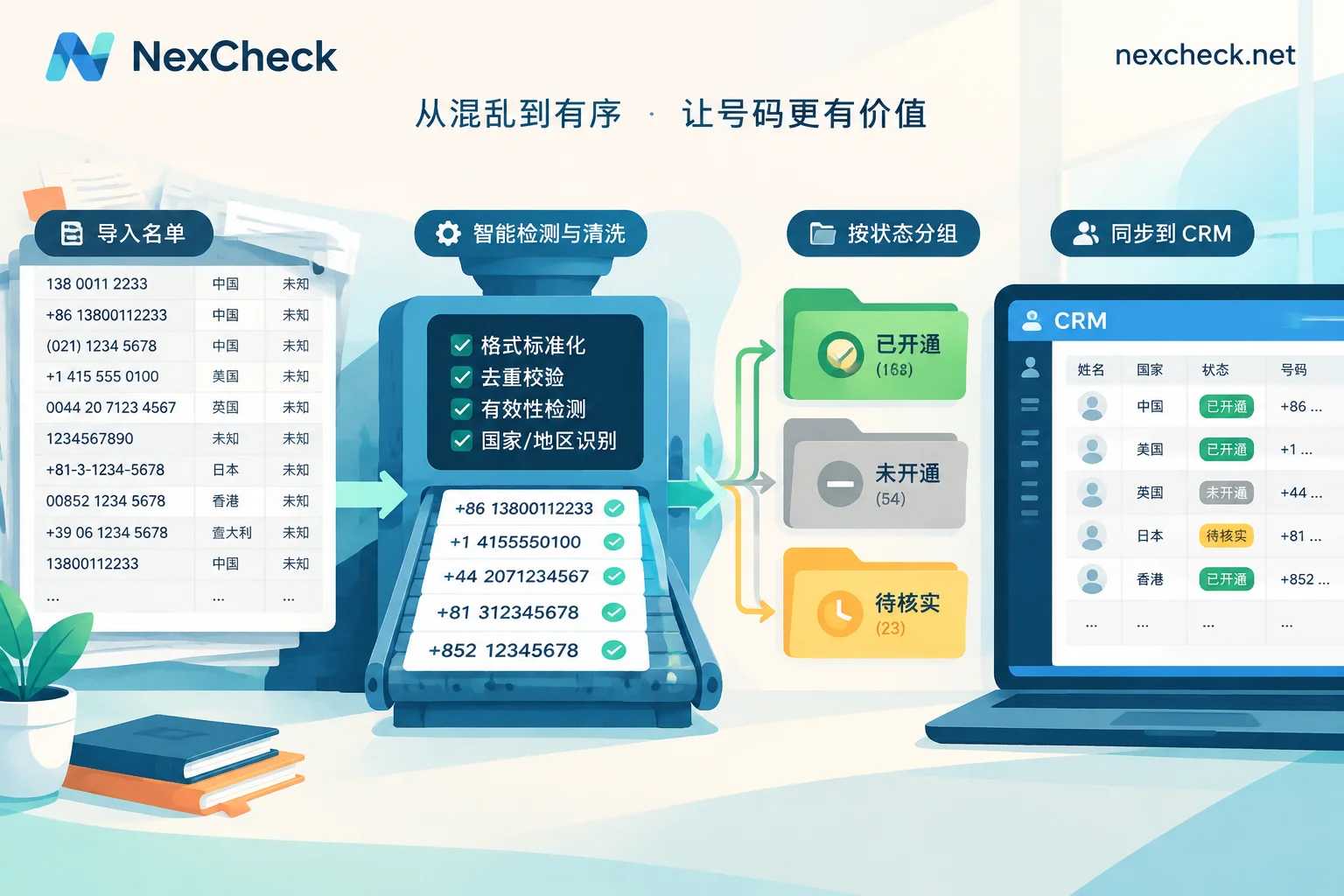
WhatsApp Customer Service Number Cleaning: From E.164 Format and Deduplication to Activation Check and CRM Write-Back
Before importing a customer service list into the WhatsApp channel or CRM, clean it in this order: keep original values, convert to E.164, deduplicate by canonical number, check activation by country, and write back in groups. The article explains the special encoding for Argentina and Mexico, why an empty privacy field does not mean inactive, and how to write results back to the CRM.
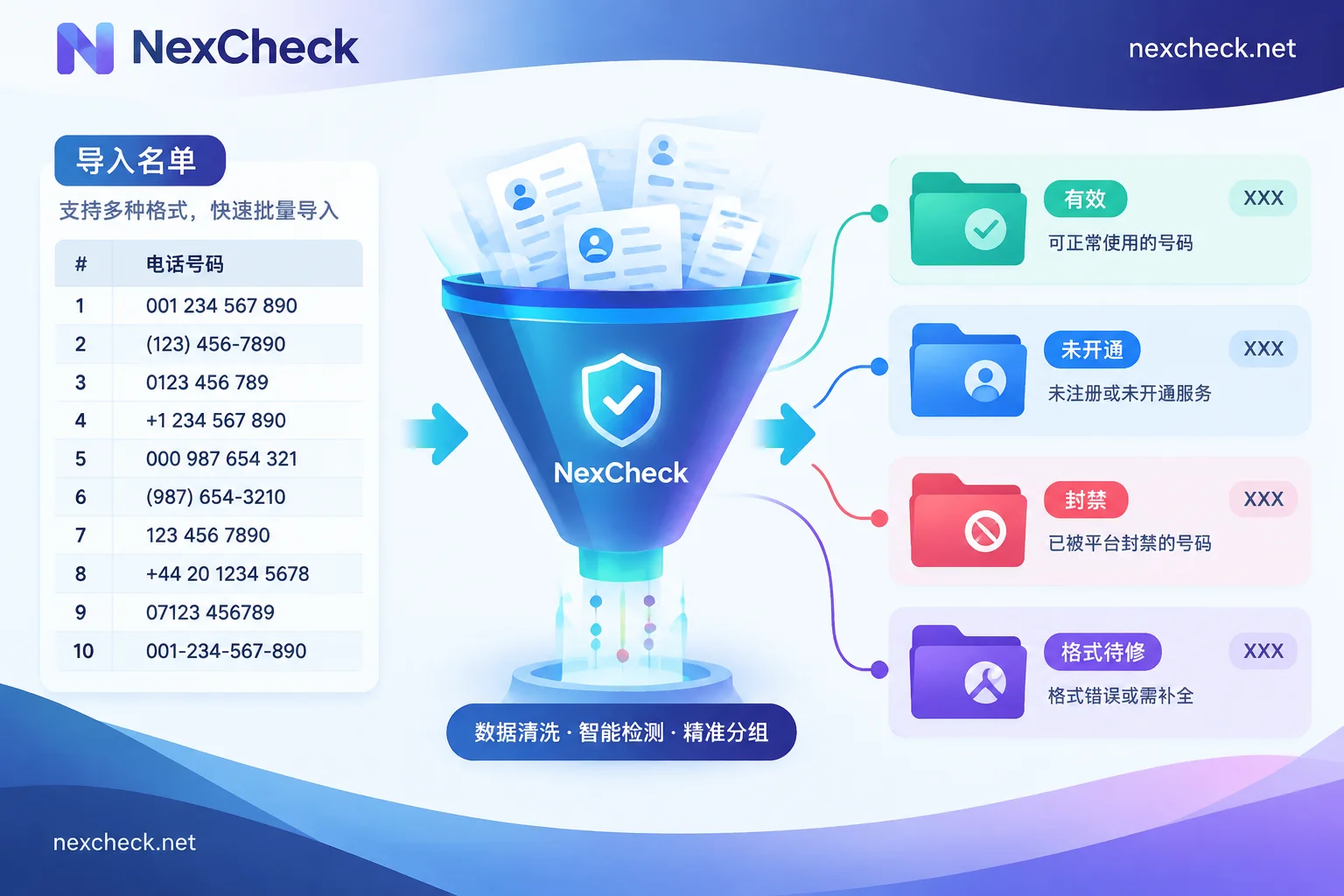
WhatsApp Invalid Number Handling: Distinguish Three Layers, Clean, Detect, and Write Back to CRM in Order
WhatsApp invalid numbers usually fall into three categories: format errors, numbers not in service, and numbers that are valid but not registered on WhatsApp or banned. This article explains the processing order: first standardize to E.164 locally, then split by country and deduplicate, then perform status detection and group by reason, and finally write back to CRM and regularly recheck. This avoids mistakenly deleting still-usable numbers and avoids paying to detect obviously incorrect data.
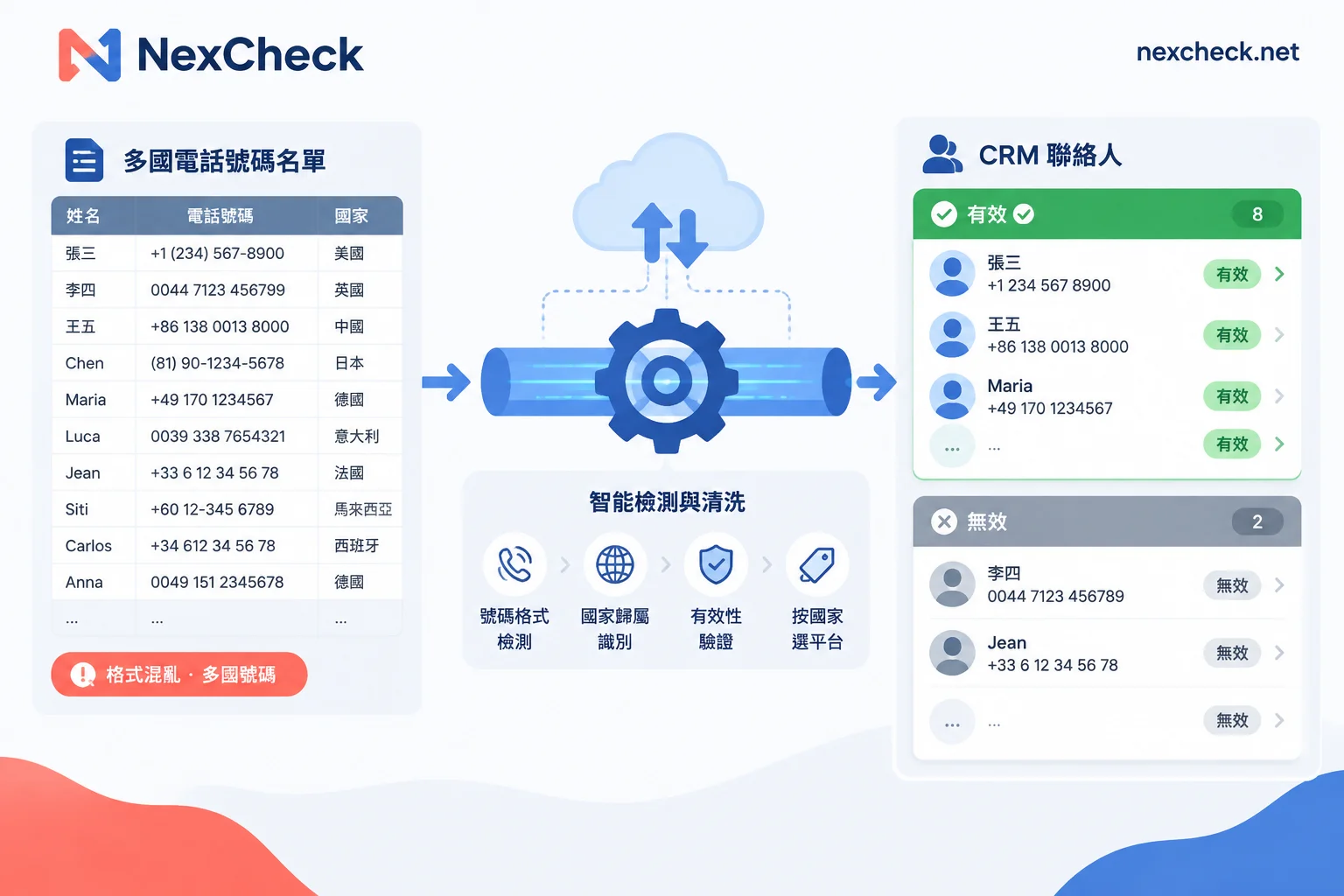
How to Integrate WhatsApp Batch Verification API: From List Cleaning and Async Submission to CRM Write-back
Using a multinational customer list as an example, this article explains in order how to batch verify WhatsApp activation and account status via API, covering E.164 normalization and deduplication, country-based batching, selecting detection layers, asynchronous task submission and Webhook reception, result field boundaries, and how to handle one-number-to-multiple-records and null overwrites when writing back to CRM.