 NexCheck-筛号平台
How to Read WhatsApp Number Check Results: Field Meanings, Privacy Boundaries, and CRM Write-back Order
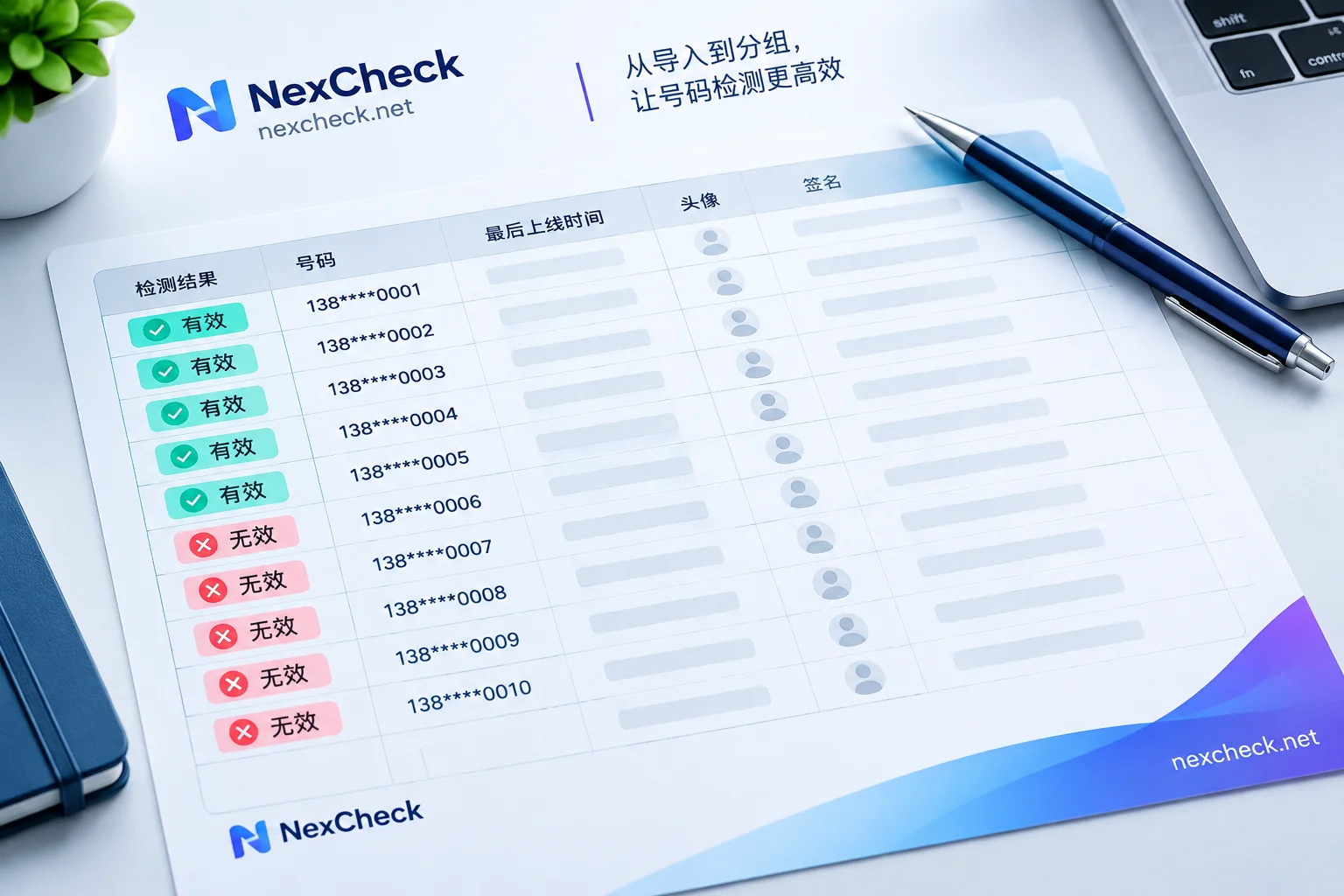
When you receive a WhatsApp number screening export or API response, the only field that can decide whether to keep a number is 'whether it is registered'; all other activity, profile photo, and about info are affected by user privacy settings and can only be used as weighted tags. This article explains each field's meaning and boundaries, provides the processing order from list preprocessing to CRM write-back, and lists several common misjudgments.
WhatsApp Business Number Verification: From List Cleaning to Business Account Field Processing Order
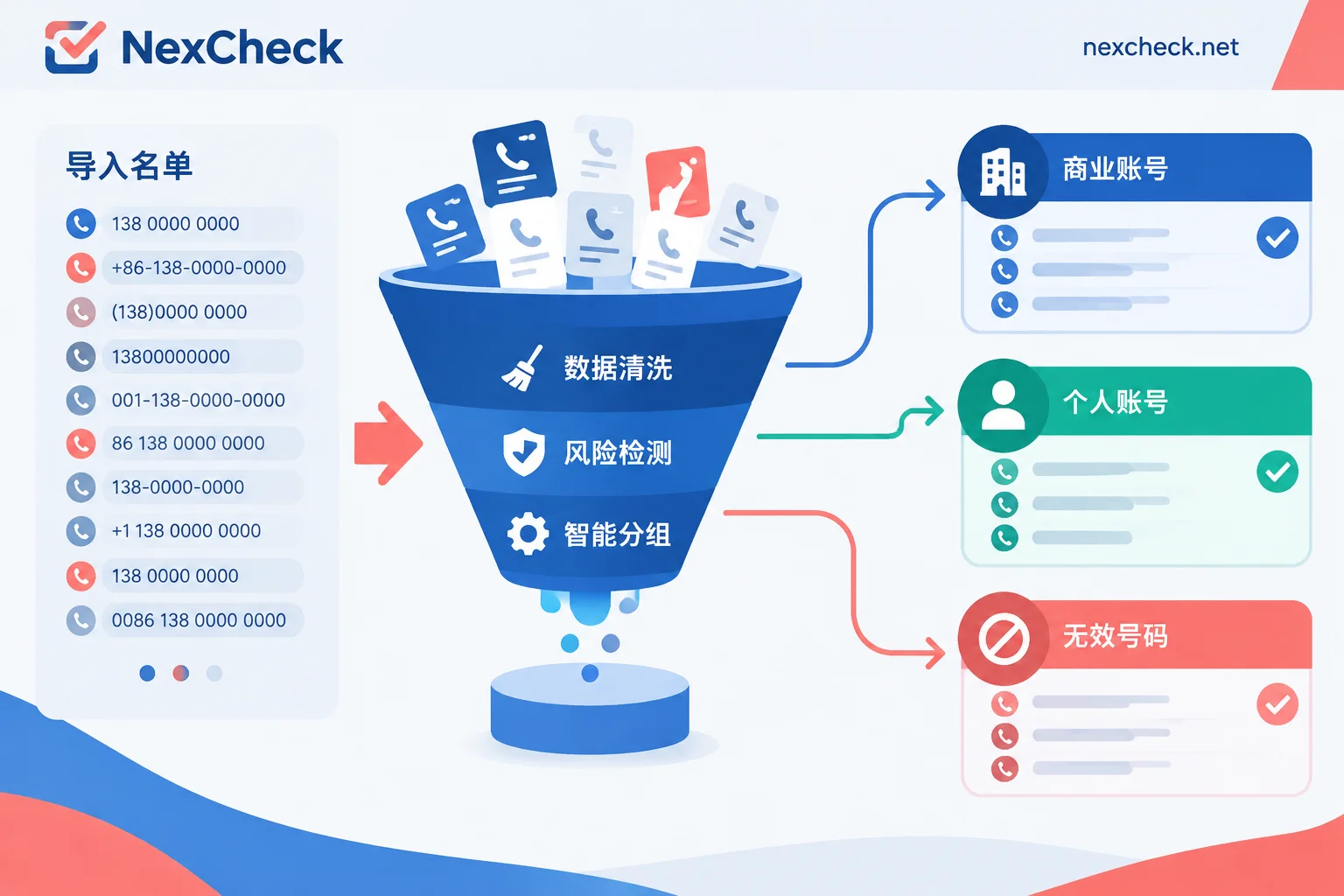
How to distinguish WhatsApp registration status and business accounts from a number list: E.164 cleaning, is_business field meaning, grouped export, Webhook CRM write-back, and privacy boundaries.
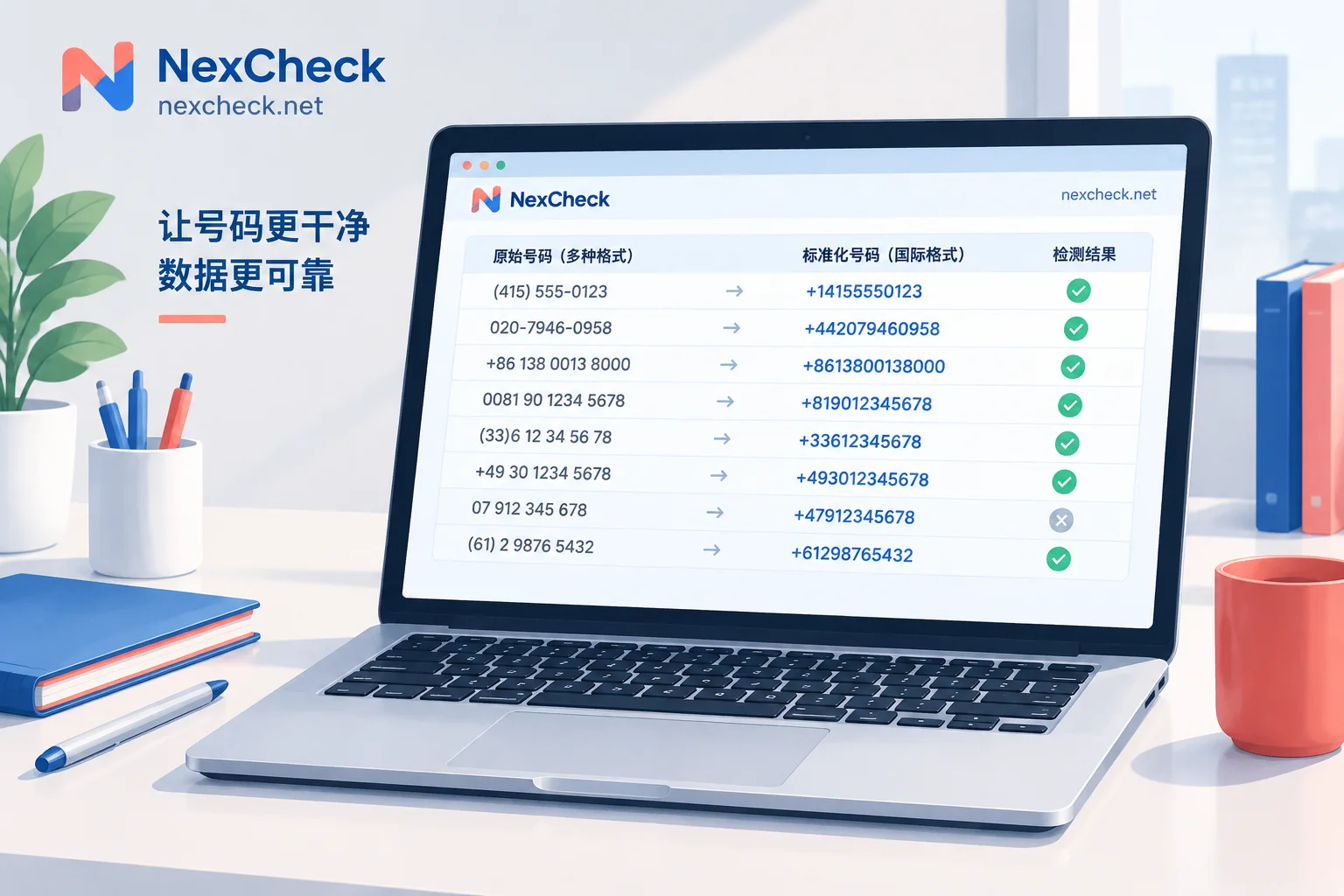
How to Batch Check if WhatsApp Numbers Are Registered? Five-Step Order from List Standardization to CRM Write-Back
To determine which numbers in a list have WhatsApp, the order matters more than the tool: first standardize to E.164, remove landlines and non-mobile numbers, then run platform registration status checks, and finally write back to the system in multiple columns. This article provides specific rules for each step, special cases for countries like Argentina and Mexico, the meaning and boundaries of returned fields, and the trade-offs between console upload and API integration.
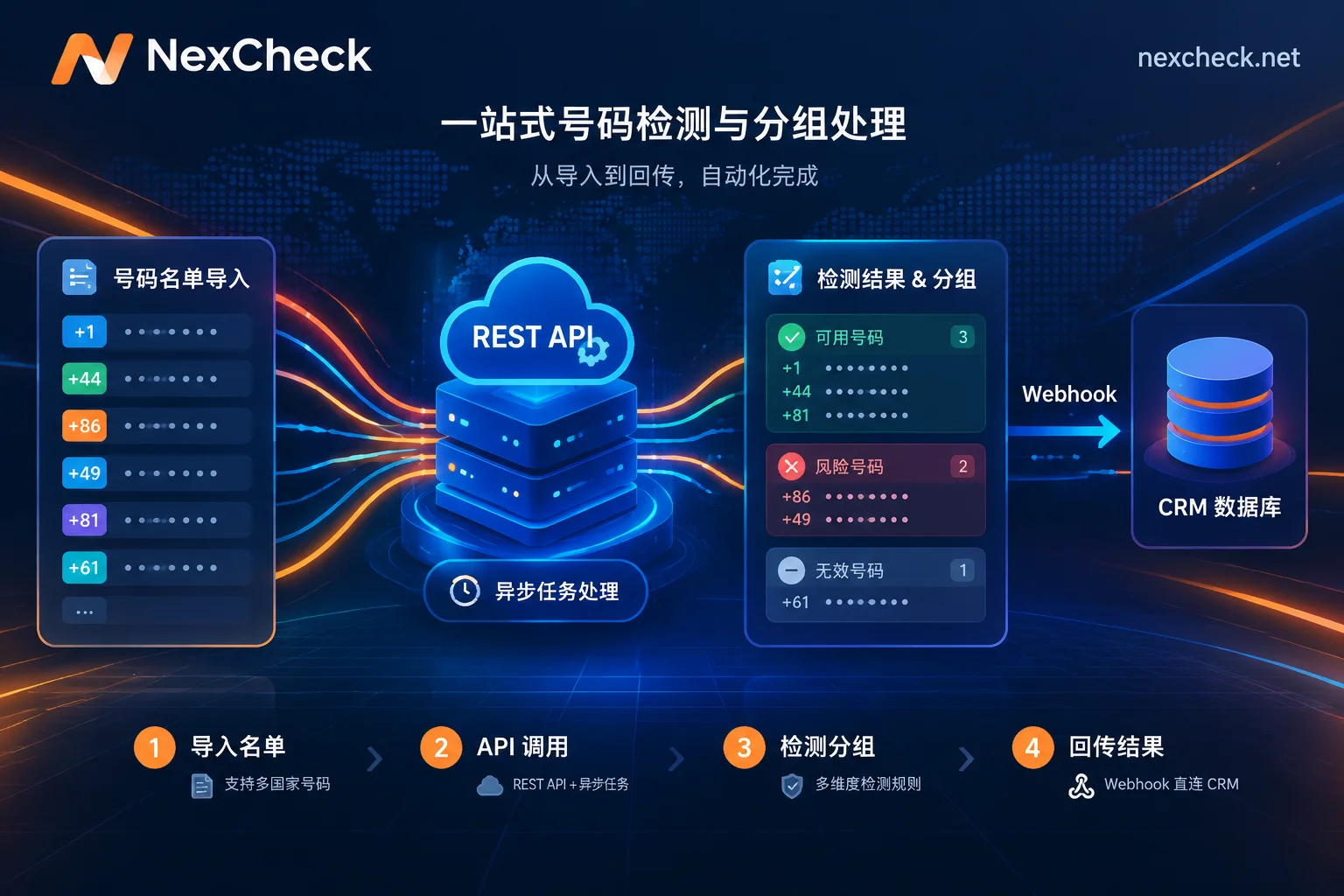
How to Integrate the WhatsApp Number Filtering API: A Complete Solution from Async Tasks to Webhook Callbacks
A guide for developers and operations teams automating list cleaning: how to use the WhatsApp number filtering API for batch number status checks—why official APIs don't offer liveness detection, input number format requirements, returned field meanings, async task and Webhook callback integration, and how to avoid risk control and compliance issues.
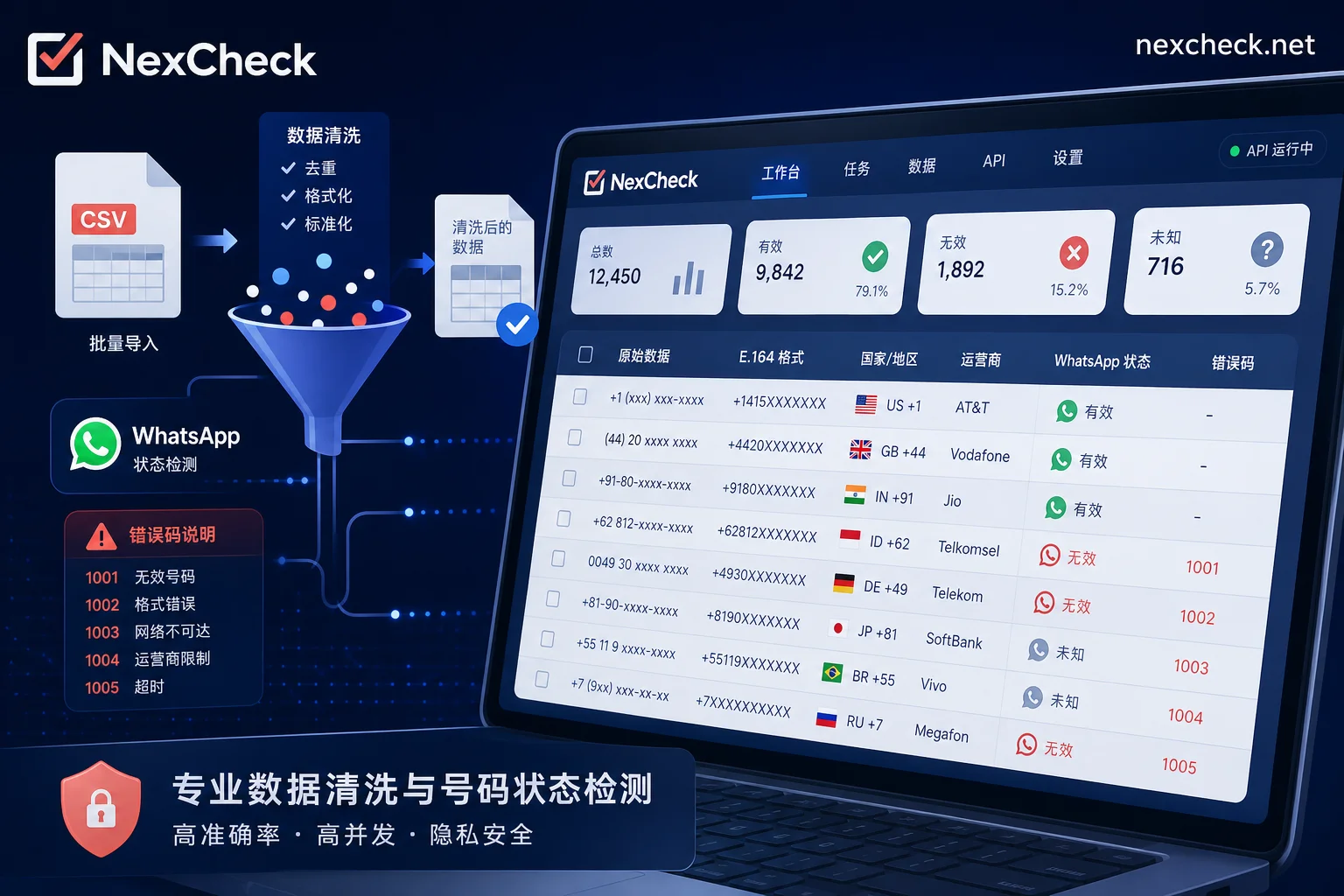
How to Screen WhatsApp Numbers? 5 Pre-Contact Self-Checks and Handling Error 1013
This article details WhatsApp number screening from E.164 format normalization to batch registration status checks, plus how to handle errors 1013 and 131026 to lower failure rates and protect your account quality score.