 NexCheck-筛号平台

How to Check if a Telegram Number Is Registered: Matching Principles, Privacy Limits, and Batch List Processing Order
Learn how to batch-check whether numbers in a list are registered on Telegram, including E.164 formatting, privacy settings that affect matching, and CRM write-back order.
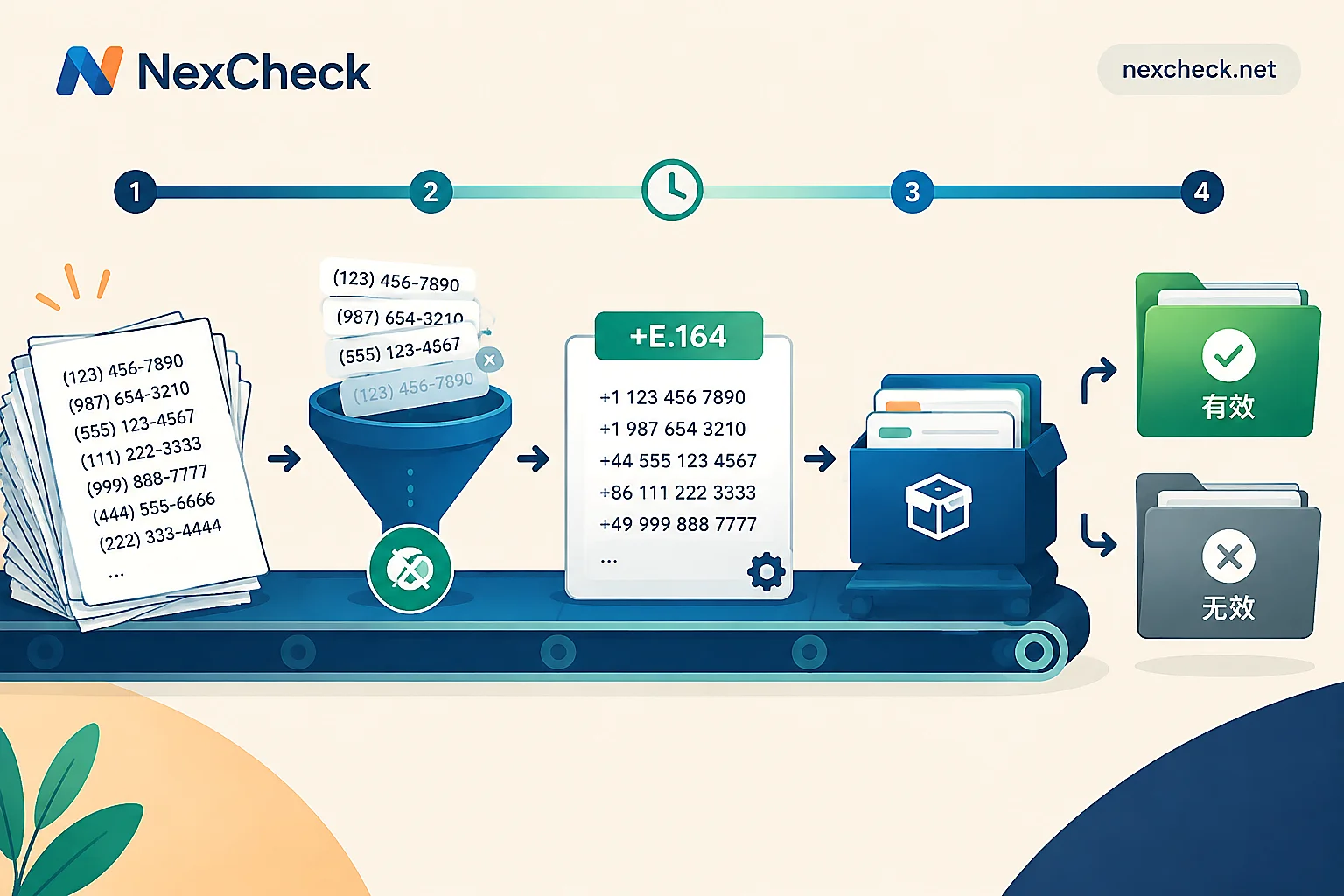
Where Is WhatsApp Number Screening Slow? Field Depth, Submission Method, and List Cleaning Speed-Up Order
A slow batch is usually caused by too many detection fields, synchronous submission, dirty lists, and API rate limits. This article explains how to locate the bottleneck and optimize in the right order.

How to Batch Check if WhatsApp Numbers Are Registered? Five-Step Order from List Standardization to CRM Write-Back
To determine which numbers in a list have WhatsApp, the order matters more than the tool: first standardize to E.164, remove landlines and non-mobile numbers, then run platform registration status checks, and finally write back to the system in multiple columns. This article provides specific rules for each step, special cases for countries like Argentina and Mexico, the meaning and boundaries of returned fields, and the trade-offs between console upload and API integration.

How to Set Throttling Parameters for Social Platform Number Screening? Interval, Concurrency, and Backoff Values
Discover how to configure throttling for batch number detection on social platforms by analyzing time-window rate limits, with a breakdown of seven key parameters and strategies for self-built scripts and third-party services.
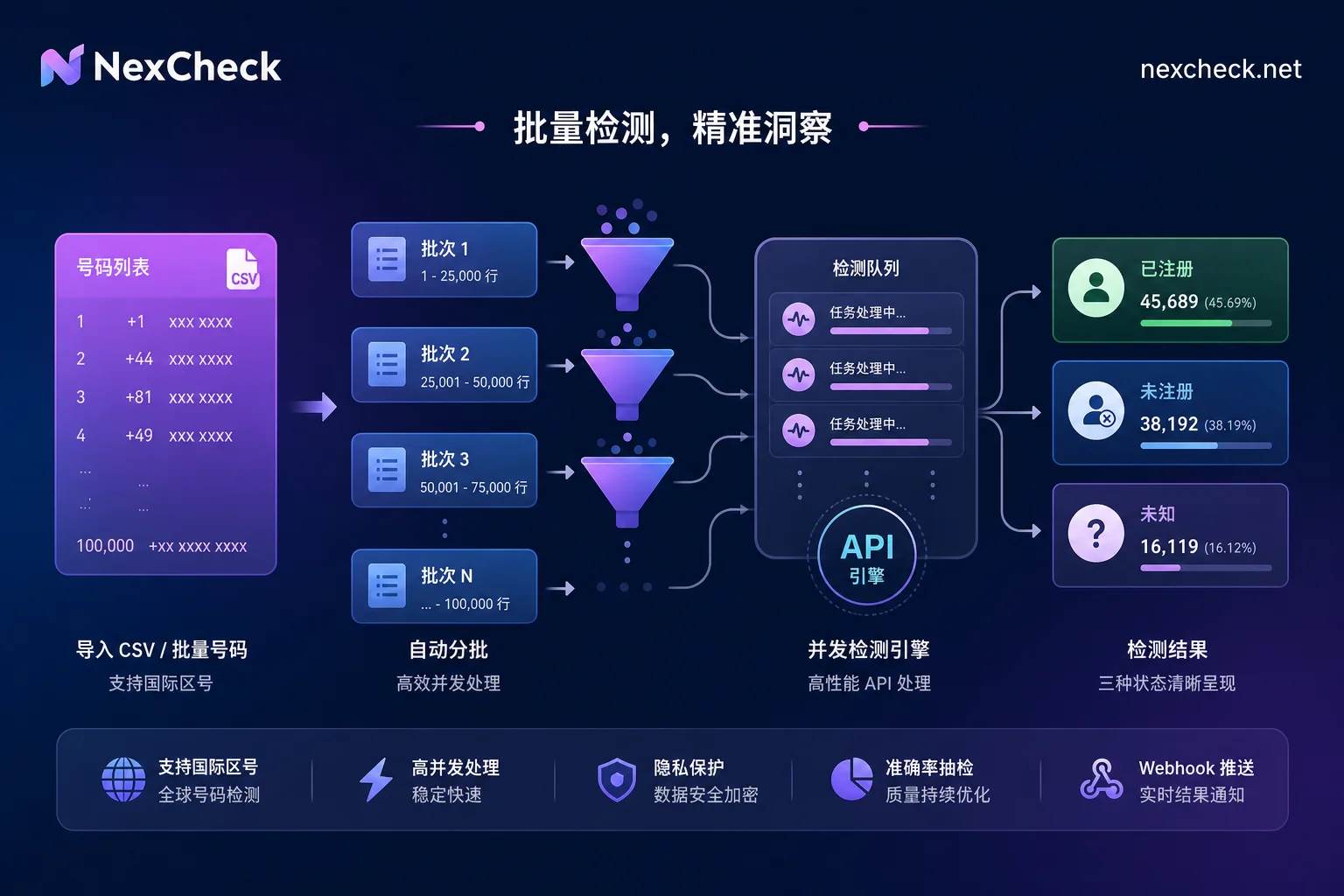
How to Batch Check WhatsApp Numbers in Batches? Three Quota Calculations
With tens of thousands of numbers to check, the key is to keep the detection batch and sending batch calculations separate. Detection batches depend on task concurrency and retry allowance, while sending batches are derived from Meta's official pairing rate limit (1 per 6 seconds, burst 45). This article breaks down error codes 131026, 131056, and 131048, and provides a fillable production schedule.