 NexCheck-筛号平台
How to Run Phone Number Activity Checks: From New Delivery Threshold Rules to Cross-Platform Activity Tiering Screening
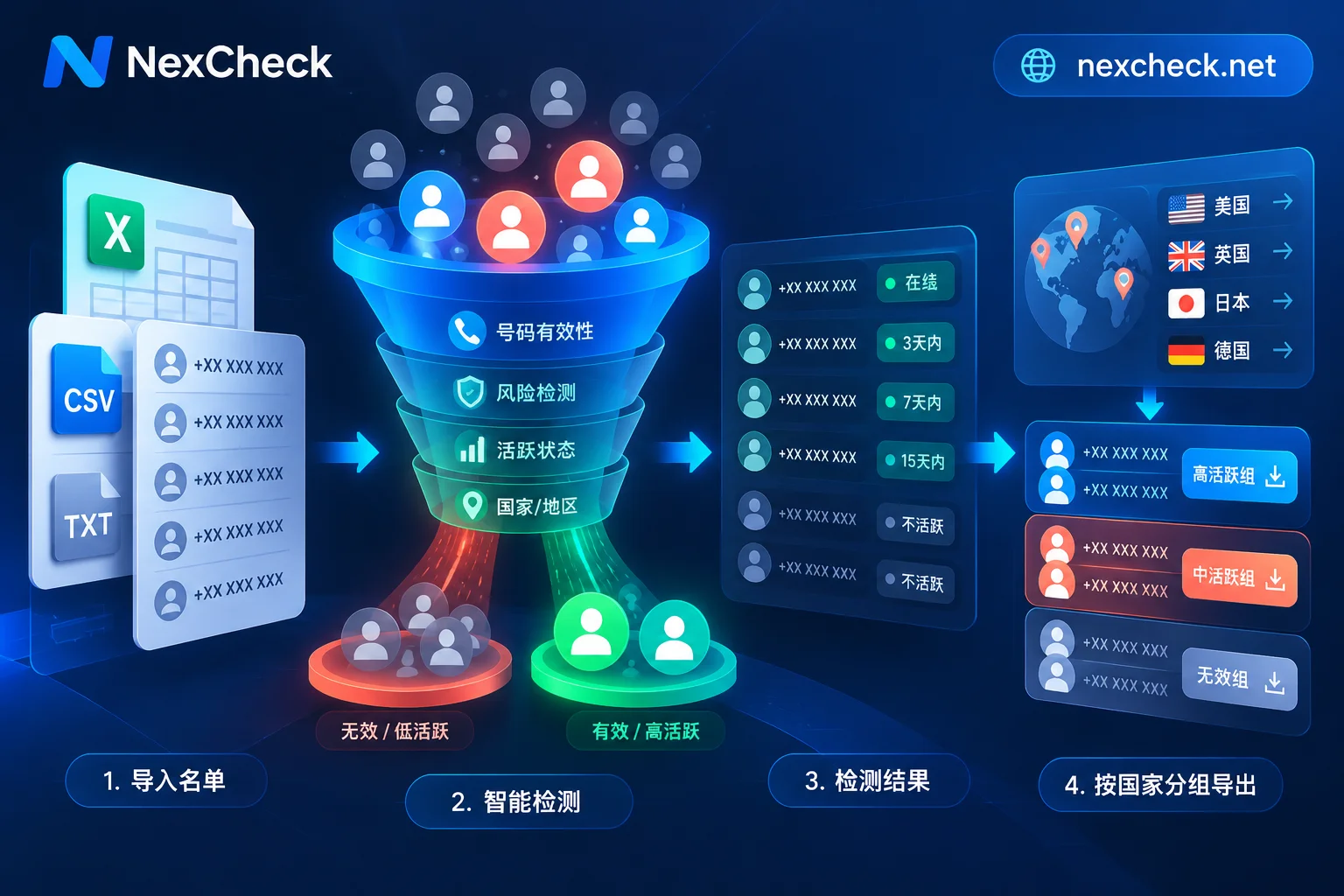
Why does a list that has already been screened for registrations still have low open rates and even drag down sender quality ratings? This article explains the essential difference between "number registered" and "number active" in light of recent dynamic delivery threshold mechanisms on messaging platforms, and breaks down the activity detection dimensions and tiered execution workflow for WhatsApp, Telegram, LINE, Zalo, and Viber.

How to Clean Phone Numbers: A Complete Workflow from Local E.164 Formatting and Deduplication, Basic Risk Screening for Disconnected Numbers, to Cross
A complete four-layer phone number cleaning workflow for global marketing, operations, and CRM data teams: local E.164 formatting and deduplication, basic disconnected number and high-risk screening, cross-platform batch filtering via progressive detection, and standardized CRM write-back.

How to Perform Facebook Number Detection: Number and Email Activation, UID Gender & Avatar Retrieval, and List Cleaning Order
This article addresses the low match rate pain point encountered by cross-border teams when building Facebook Custom Audiences and cleaning CRM lists. It breaks down the field boundaries and privacy limitations of Facebook number activation, email activation, UID, and profile gender/avatar detection, and provides a complete execution order from E.164 format standardization, deduplication to layered screening.

How to Filter Viber Numbers: Activation, Activity Range, and 'Account Age' Detection in List Cleaning Order
A three-layer Viber number filtering logic for key markets like the Philippines, Ukraine, and Greece: clarifying that 'Account Age' refers to registration duration, not user age, and outlining the sequential filtering process—format cleaning, activation detection, activity range, and account age—to reduce invalid outreach costs and update CRM.

How to Do Zalo Number Screening: Vietnam 10-Digit Number Cleaning, Dual-Channel Selection, and Tiered Detection Order
A practical guide to Zalo number screening for the Vietnam market: cleaning legacy 11-digit numbers into standardized 10-digit E.164 format, then running tiered detection for account registration, activity range, and gender/age with nickname to minimize list-cleaning costs.
