 NexCheck-筛号平台

How to Choose a Telegram Number Screening Tool: Fields, Privacy Boundaries, Integration Methods, and Billing
When evaluating a Telegram number screening tool, check which fields it returns, how activity is represented, whether it distinguishes 'not found' from 'not registered,' if it requires mounting your account, and whether its web console, API, and billing suit your workflow; then test with a small batch.

How to Do WhatsApp Number Detection: A Complete Sequence from List Cleaning to Field Interpretation
A complete guide to WhatsApp number detection: clean to E.164, deduplicate and batch by country code, run basic number checks to filter out invalid and non-mobile numbers, then submit for platform registration status, and finally store and write back results by multiple columns. The article explains rewriting rules, returned field meanings, privacy boundaries, and when to use web upload vs. API submission.
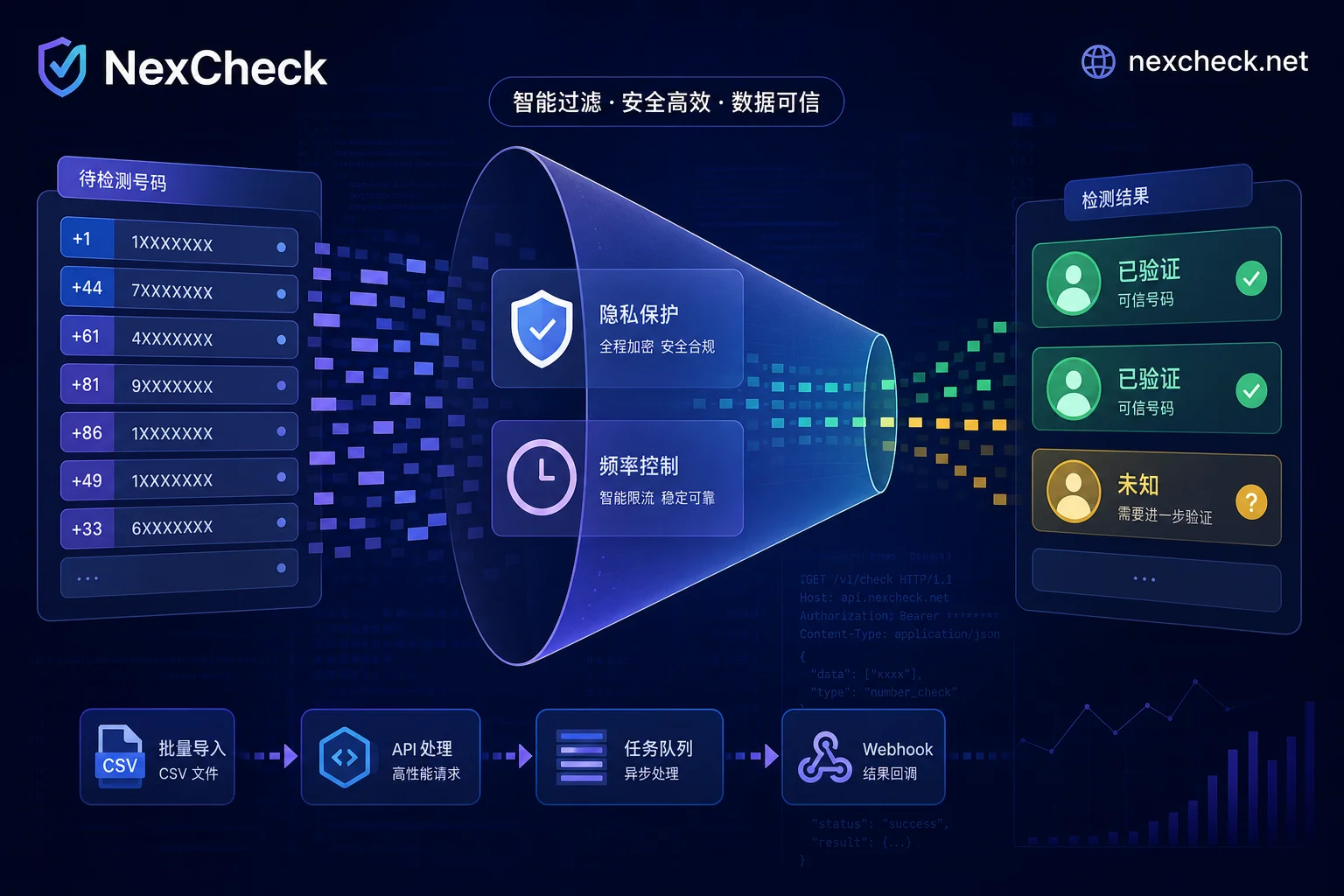
Why Is Telegram Phone Number Detection Hit Rate So Low? Three Layers: API Boundaries, Privacy Settings, and Rate Limiting
Analyzing why Telegram phone number detection hit rates are low due to protocol boundaries, privacy settings, and rate limiting, with recommendations for refining data models.
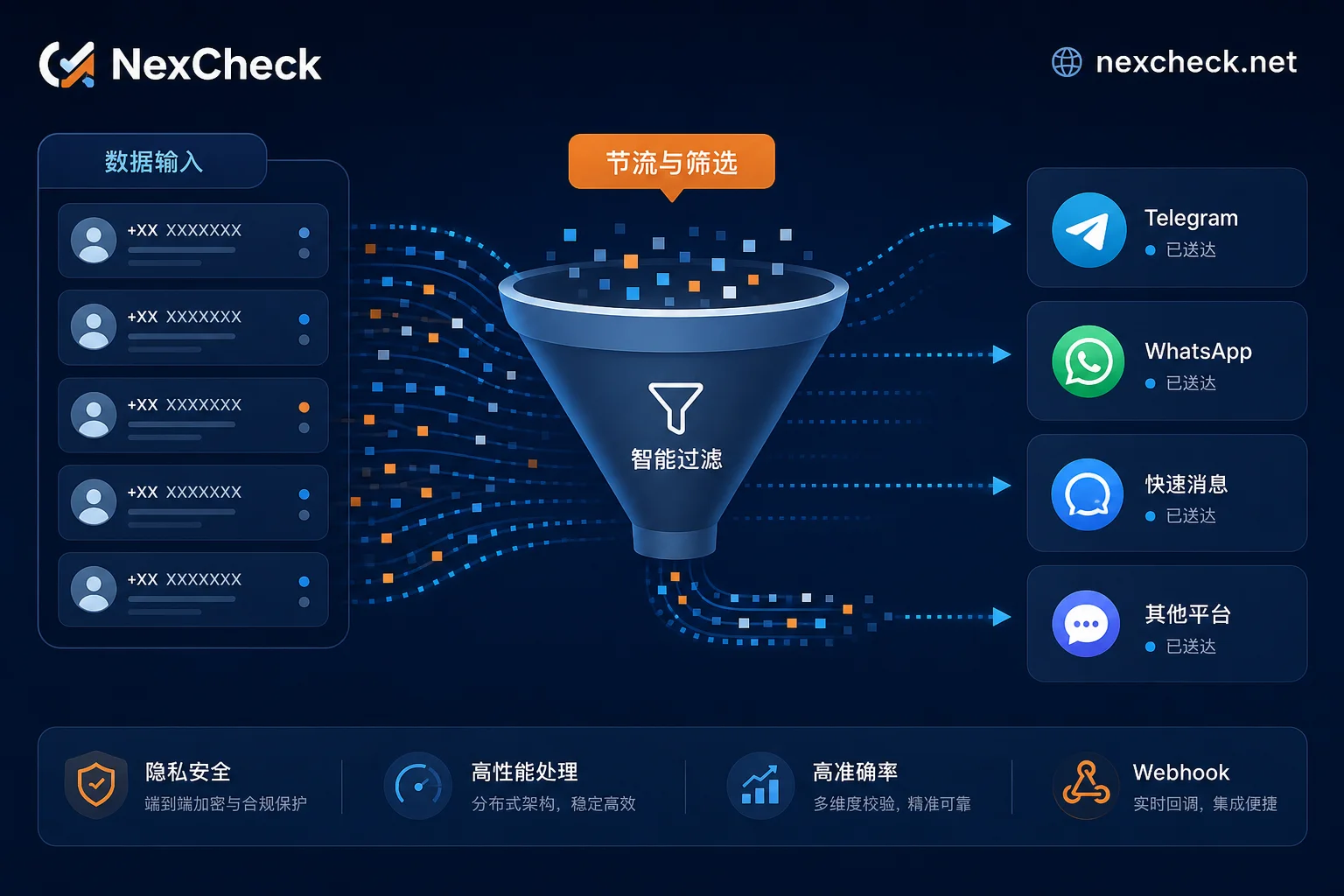
How to Set Throttling Parameters for Social Platform Number Screening? Interval, Concurrency, and Backoff Values
Discover how to configure throttling for batch number detection on social platforms by analyzing time-window rate limits, with a breakdown of seven key parameters and strategies for self-built scripts and third-party services.
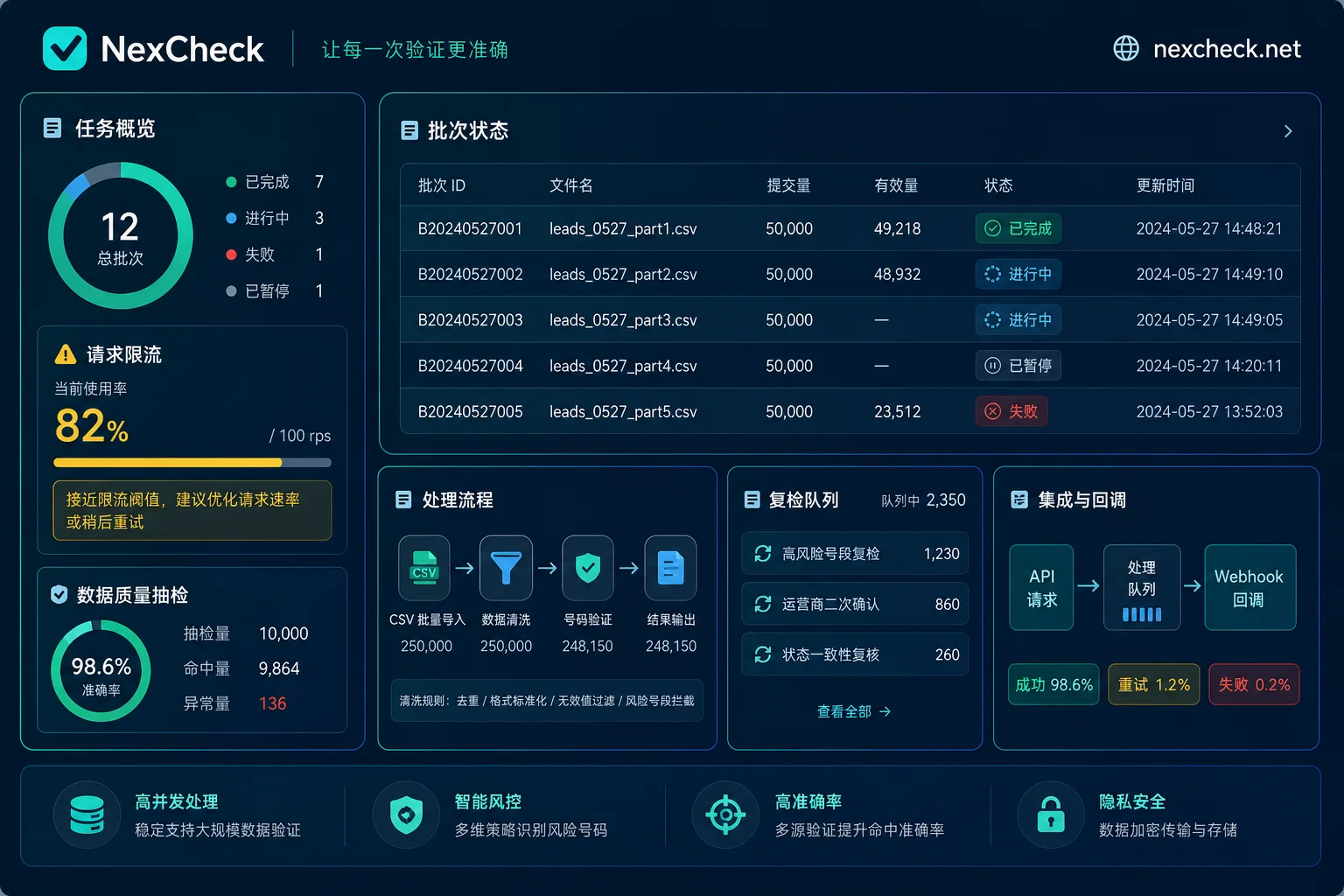
How Often Should You Re-Run Bulk Number Screening? 3 Invalidation Signals
Bulk number screening results have no fixed validity period; validity depends on three signals: probing-side rate limiting, list-side changes, and outreach-side discrepancies. Trigger re-checks based on these signals, prioritizing anomalous unknown subsets.