 NexCheck-筛号平台
How to Check if a Telegram Number Is Registered: Matching Principles, Privacy Limits, and Batch List Processing Order
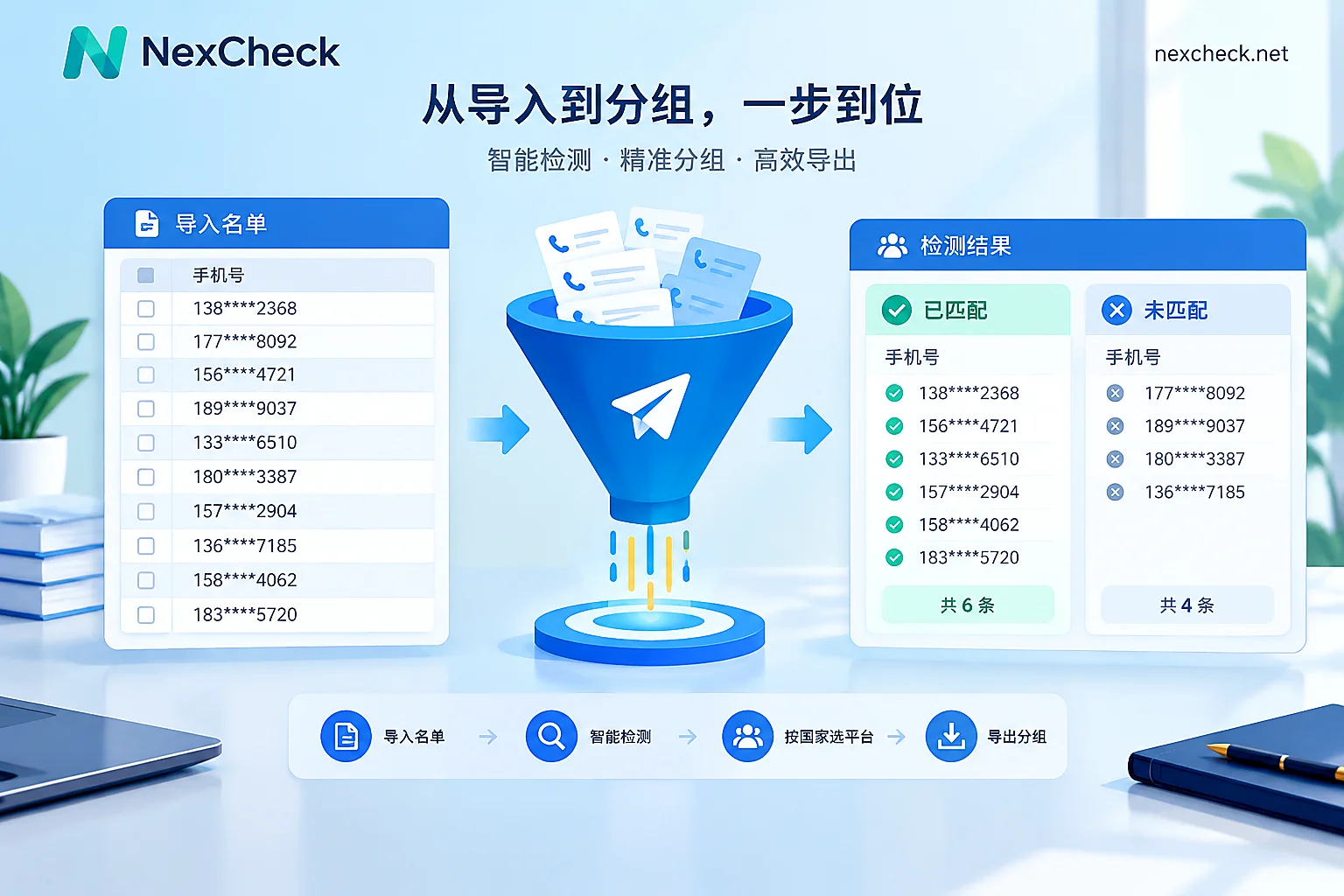
Learn how to batch-check whether numbers in a list are registered on Telegram, including E.164 formatting, privacy settings that affect matching, and CRM write-back order.
How to Do Telegram Number Detection: List Preparation Order, Available Fields, and Privacy Limits
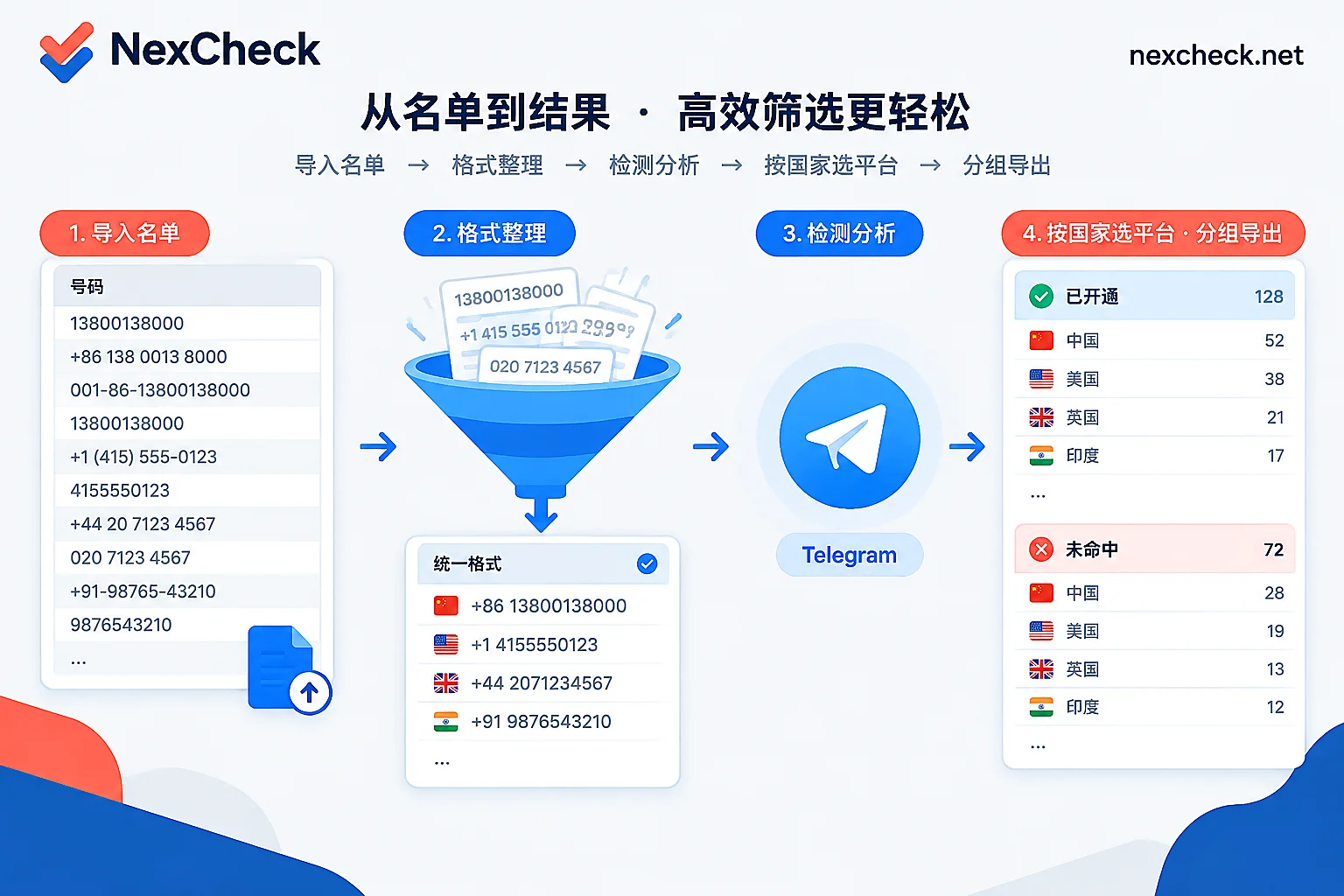
This article explains how to perform Telegram number detection on an existing phone number list: first normalize to E.164 format and deduplicate, then select detection items to submit; it explains what "not found" and the four activity levels each mean; and finally describes result write-back methods via console upload, API, and Webhook.
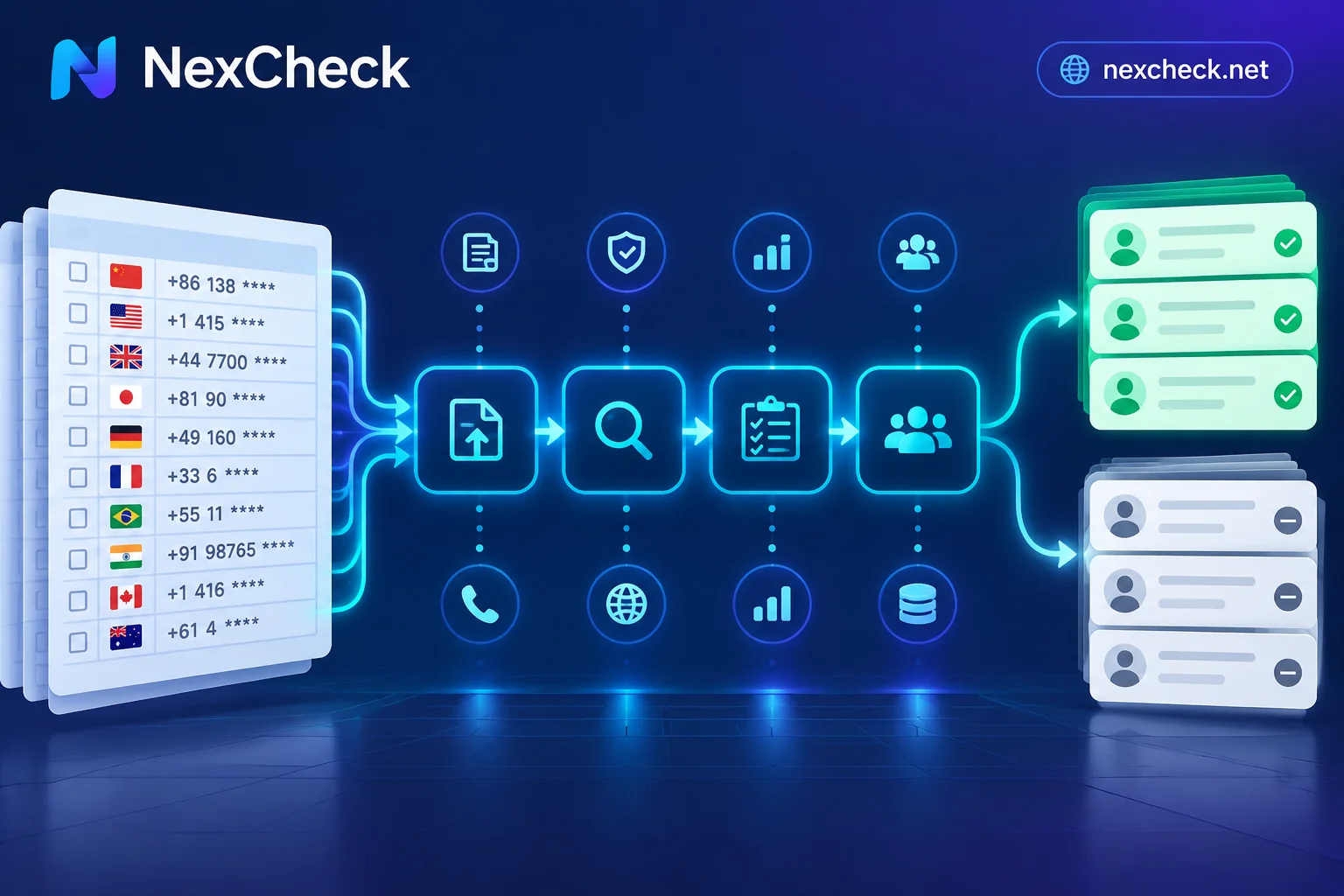
How to Do WhatsApp Number Detection: A Complete Sequence from List Cleaning to Field Interpretation
A complete guide to WhatsApp number detection: clean to E.164, deduplicate and batch by country code, run basic number checks to filter out invalid and non-mobile numbers, then submit for platform registration status, and finally store and write back results by multiple columns. The article explains rewriting rules, returned field meanings, privacy boundaries, and when to use web upload vs. API submission.

The Three-Layer Processing Order for International Number Detection: From Format Standardization to Platform Activation Status
Cross-border customer list detection should proceed in three layers: first use the E.164 standard to complete area codes and parse number ranges, then query carrier and empty-number status via HLR, and finally detect registration and activity status for business platforms. This article presents the cleaning and splitting order for multi-country lists, the boundary between basic line verification and platform status detection, and the rationale for choosing between console batch processing and API write-back.

How to Do Overseas Mobile Number Detection? Four-Step Processing Order and Field Meanings for Cross-Border Lists
A four-step workflow for international number lists: E.164 normalization, deduplication, country grouping, baseline detection (line type, status, carrier, risk), then platform account status checks, with multi-column storage and CRM write-back guidance.