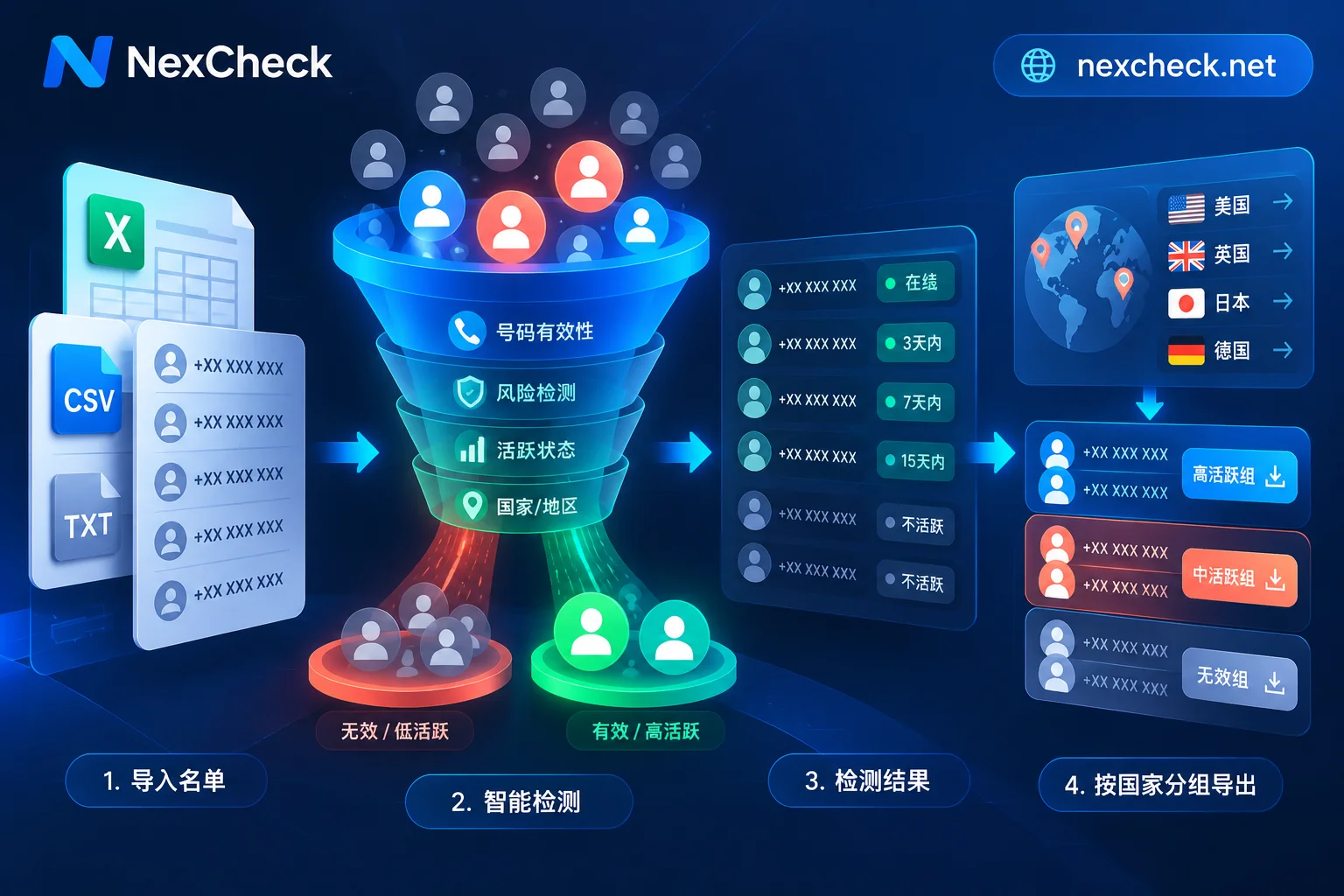
 NexCheck-筛号平台

The Three-Layer Processing Order for International Number Detection: From Format Standardization to Platform Activation Status
Cross-border customer list detection should proceed in three layers: first use the E.164 standard to complete area codes and parse number ranges, then query carrier and empty-number status via HLR, and finally detect registration and activity status for business platforms. This article presents the cleaning and splitting order for multi-country lists, the boundary between basic line verification and platform status detection, and the rationale for choosing between console batch processing and API write-back.

How to Do Overseas Mobile Number Detection? Four-Step Processing Order and Field Meanings for Cross-Border Lists
A four-step workflow for international number lists: E.164 normalization, deduplication, country grouping, baseline detection (line type, status, carrier, risk), then platform account status checks, with multi-column storage and CRM write-back guidance.
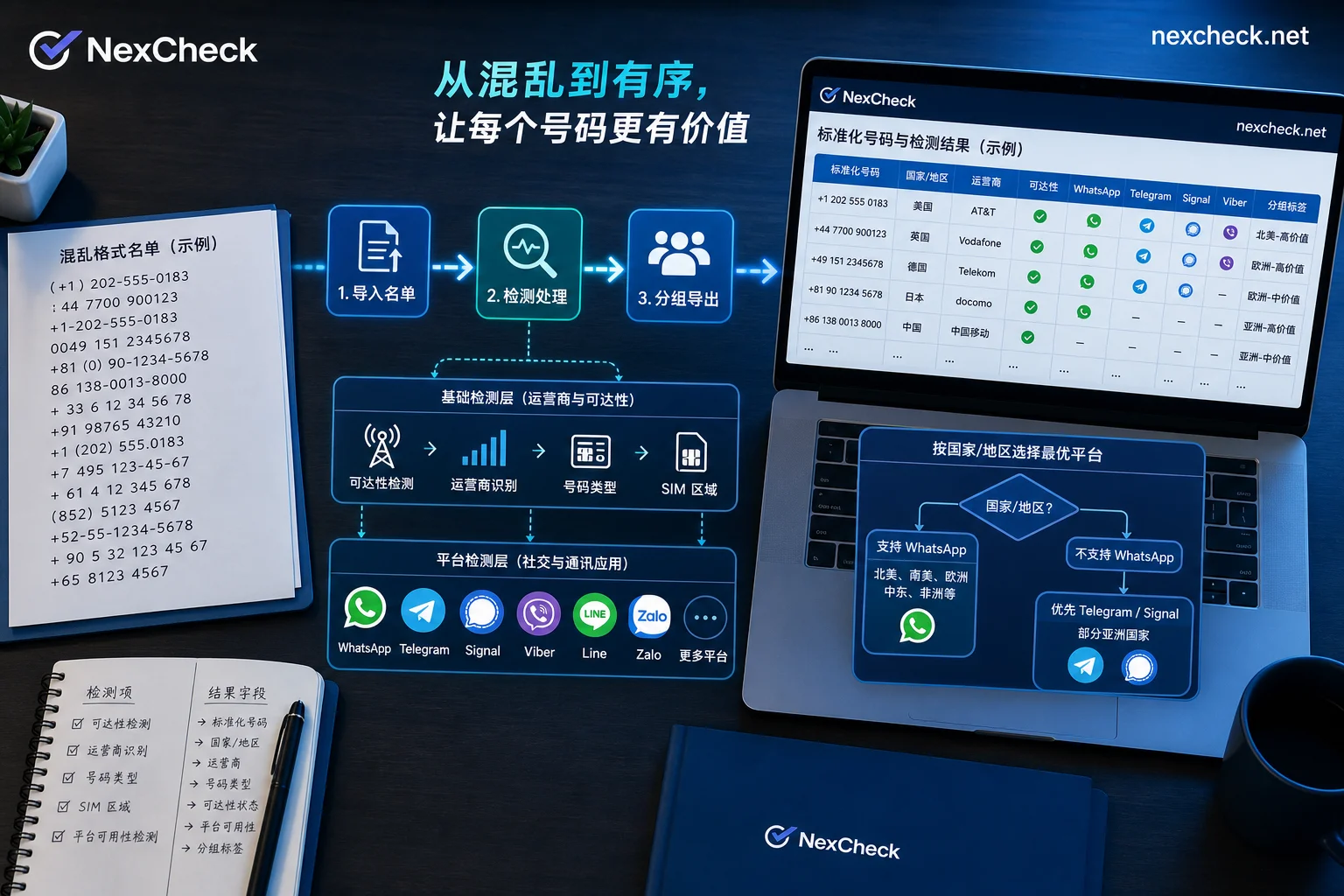
How to Choose and Use a Number Detection Platform: A Complete Solution from List Format to Tiered Detection
When you have a customer number list, you need to first normalize and deduplicate according to E.164, then group by country, filter out landlines and invalid numbers through basic detection, and finally check account status for target platforms. Basic detection determines whether a number is valid at the telecom network level, while platform detection confirms activation and activity on a specific application; the two solve different problems.
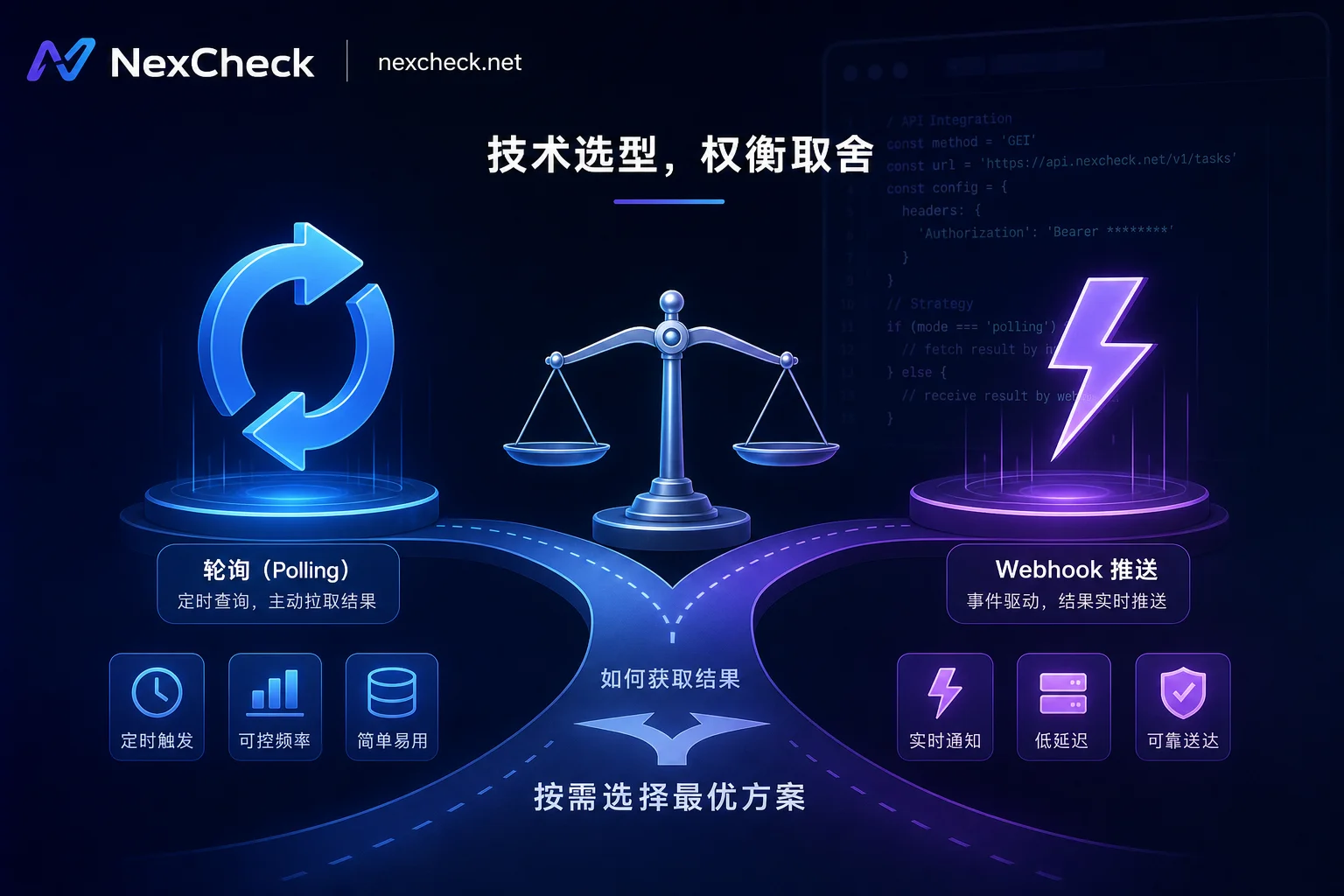
Polling vs. Webhook for Number Detection: Tiered by Task Volume and Latency Tolerance
For daily detection volumes of tens of thousands requiring real-time CRM write-back, Webhook is the standard mechanism to reduce network overhead; but for small batches or intranet environments, polling is more deterministic. This article explains Meta's 5-second response window and subscribed_apps binding rules, providing a four-step troubleshooting checklist and idempotency keys to prevent duplicate charges.
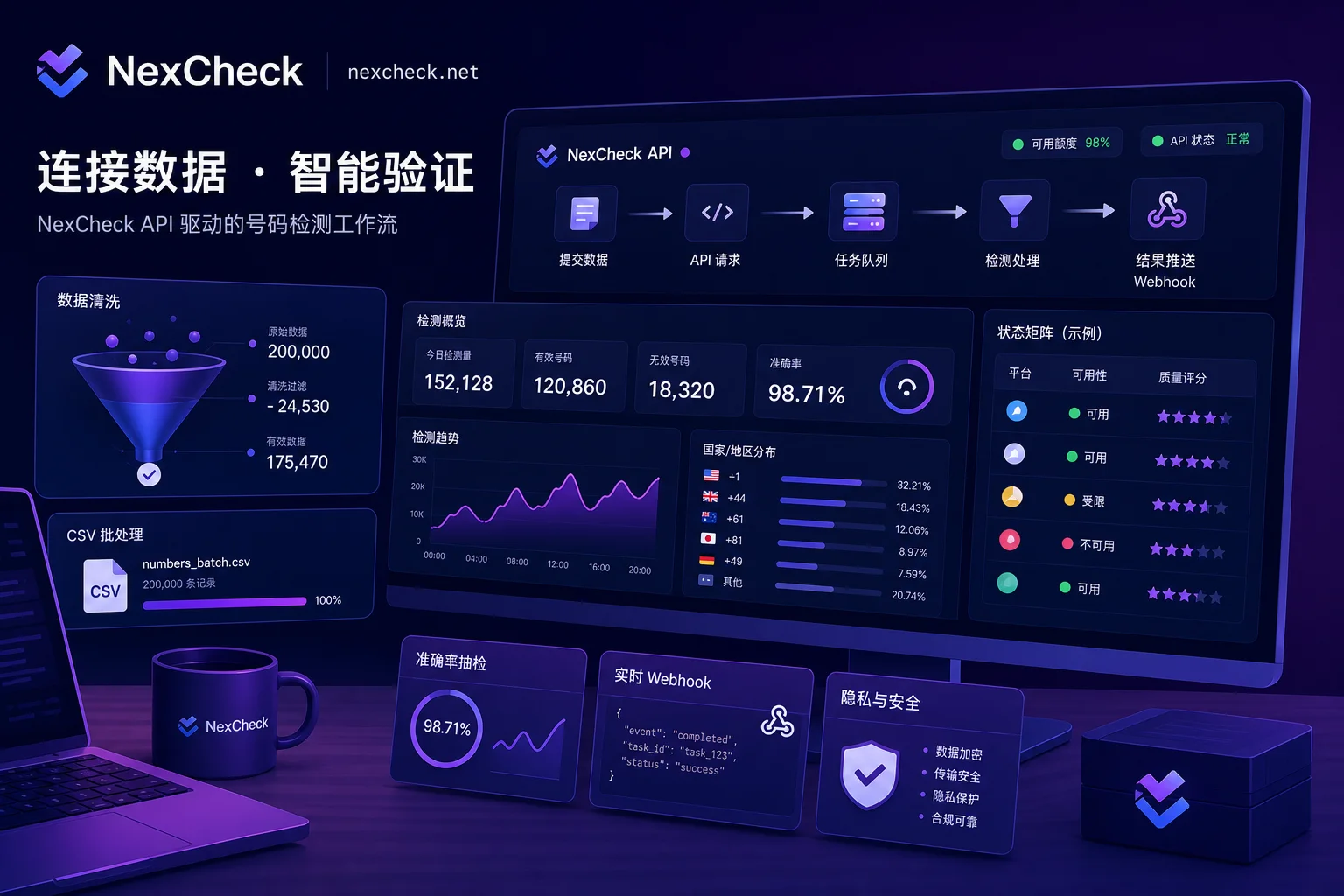
How to Integrate a Bulk Number Detection API: A 6-Step Guide
This article presents a six-step integration sequence for a bulk number detection API, covering asynchronous tasks, polling and callbacks, idempotent retries, and three-tier result storage, along with troubleshooting for callback failures and 429 rate limits.