 NexCheck-筛号平台
How to Clean a Telegram Customer List: Formatting, Activation Checks, Activity Tiers, and CRM Write-Back
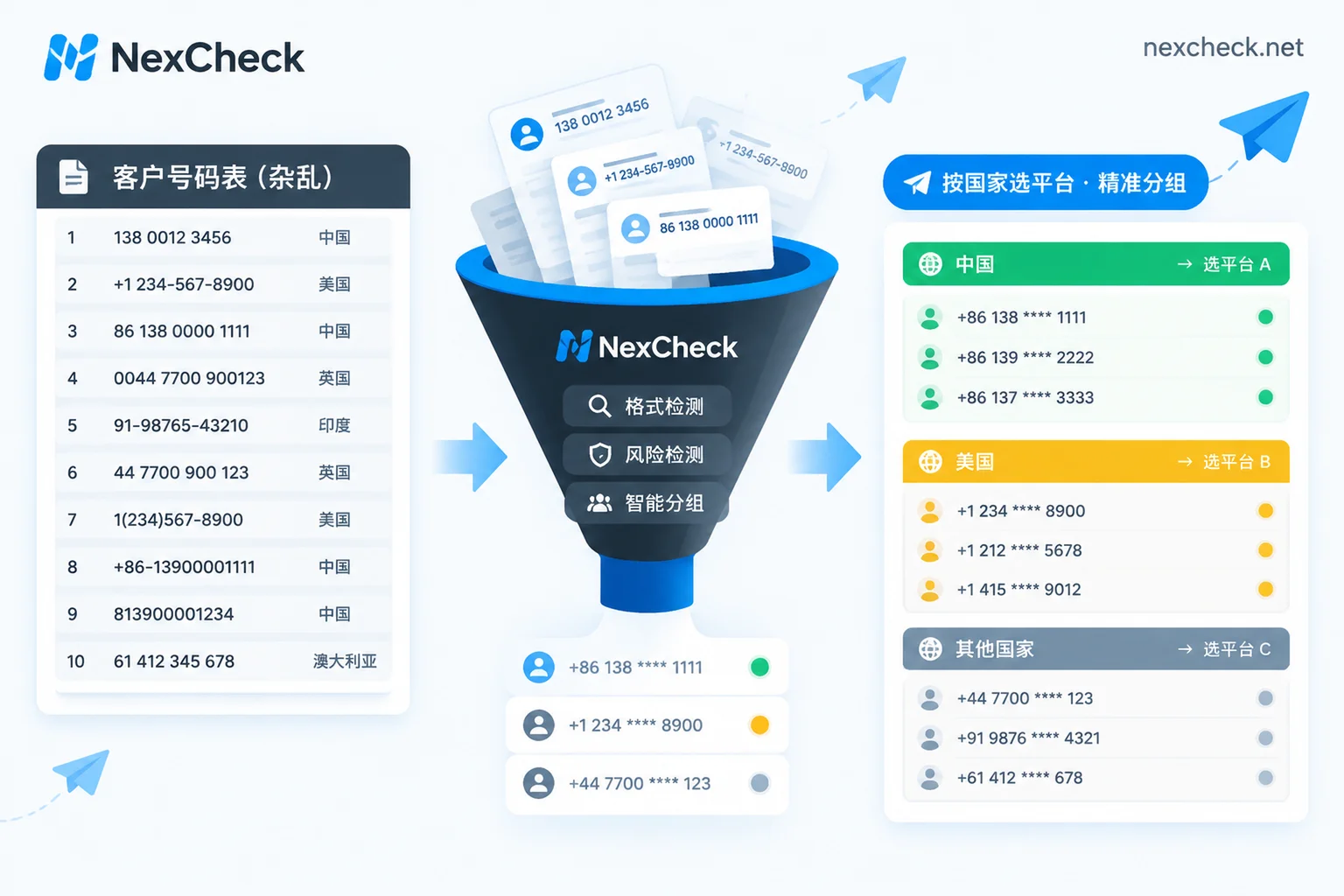
Using a mixed-country customer list as an example, this article explains the sequence for cleaning a Telegram customer list: first unify numbers to E.164 and deduplicate, then split by country, run basic number checks and Telegram activation checks, and finally segment by Last seen ranges and write results back to CRM. It also clarifies why "not found" does not mean unregistered and how to interpret results like "a long time ago."

How to Filter Telegram Numbers from a CSV: List Cleanup, Batch Upload, Field Interpretation, and CRM Write-back
Using a multi-country contact CSV as an example, this article explains the preparation order before Telegram bulk checking: keep record IDs, unify to E.164 format, deduplicate after normalization, split by country into batches, and save as UTF-8. It also explains the meaning of result fields such as registered, active, and banned, clarifies the 'not found' cases caused by privacy settings, and how to write results back to CRM using record IDs.
How to Use a Telegram Number Screening Platform: From List Cleaning and Field Selection to Result Write-back
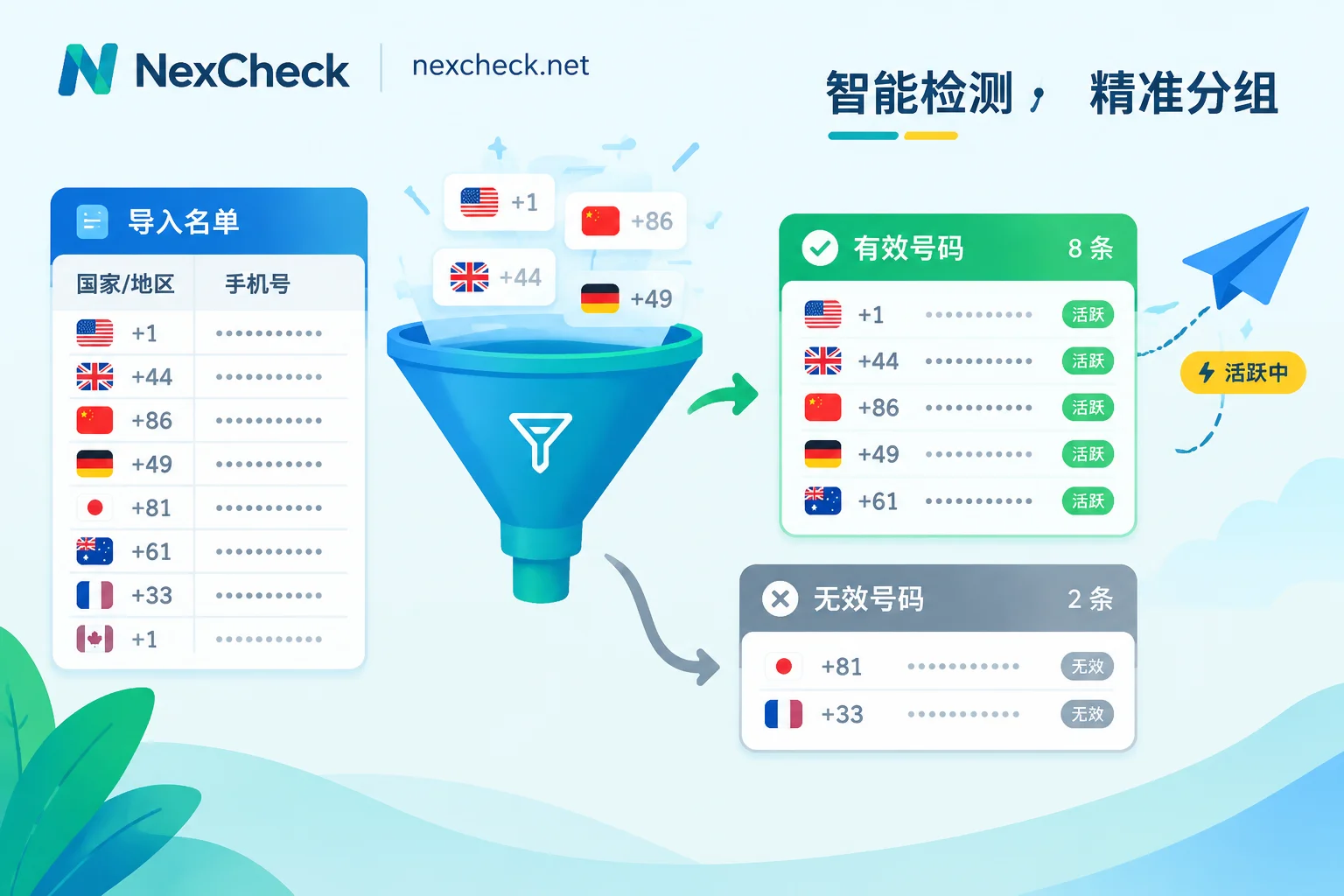
A guide for operations, data teams, and developers who have a phone number list and want to check Telegram registration and activity status, covering format normalization, deduplication, detection field selection, interpretation of valid/invalid groups and activity tiers, and web vs. API options with compliance boundaries.
Telegram Number Screening: List Cleaning Order, Online Status Fields, and Privacy Boundaries
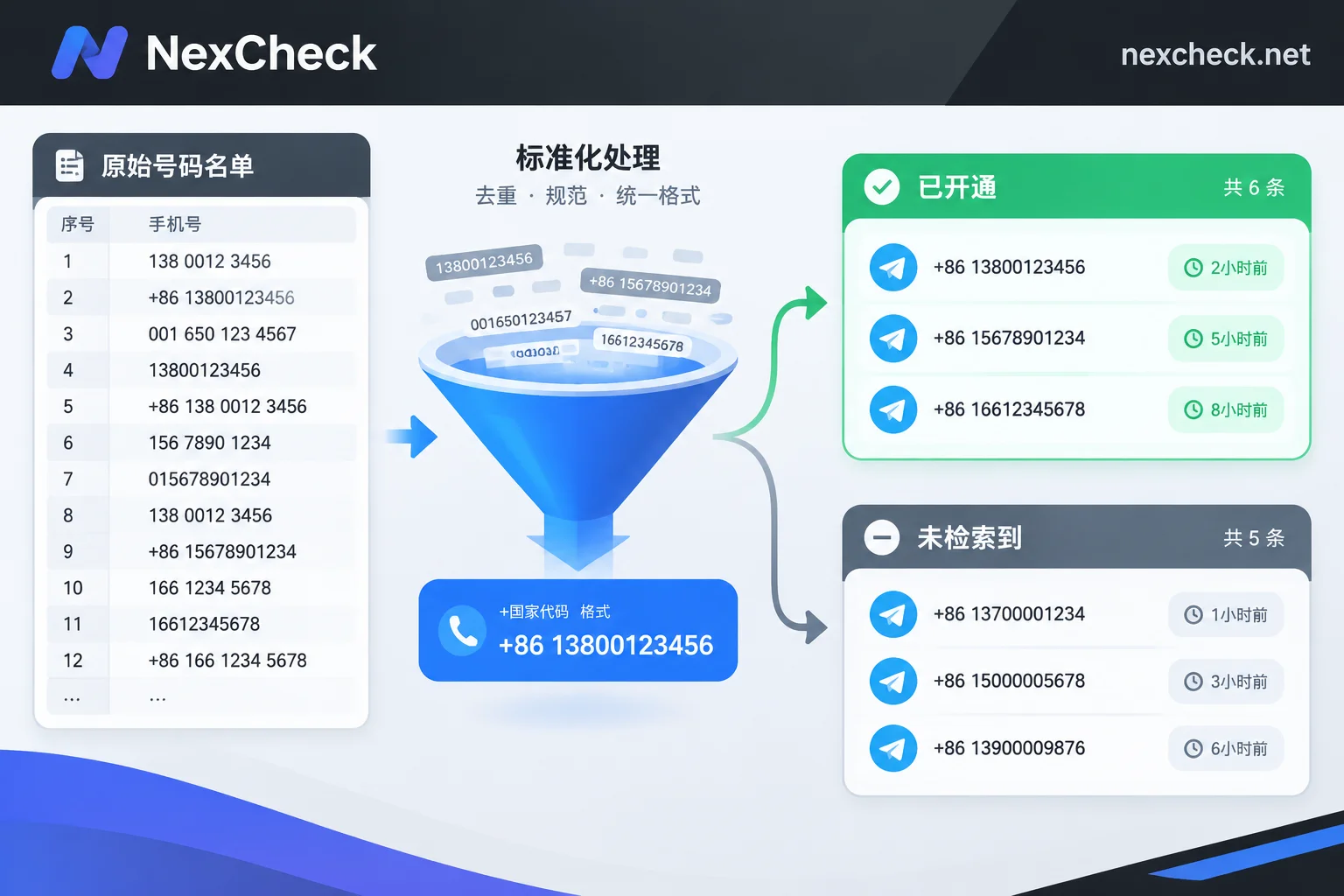
A practical guide to screening a phone number list against Telegram: normalize to E.164, deduplicate, split by country, interpret the four fuzzy Last seen ranges, and write grouped results back to CRM.

How to Deduplicate WhatsApp Numbers: Normalize to E.164 First, Then Deduplicate by Canonical Number
The same phone number can appear as different text forms with spaces, plus signs, 00 prefixes, or local leading zeros, so direct text comparison misses many duplicates. This article explains the practical order of operations: keep the original column, clean symbols, unify prefixes, add country codes, validate length, deduplicate by canonical number, and retain a mapping table before submitting for verification, reducing verification costs from duplicate rows and making it easy to write results back to each original record.