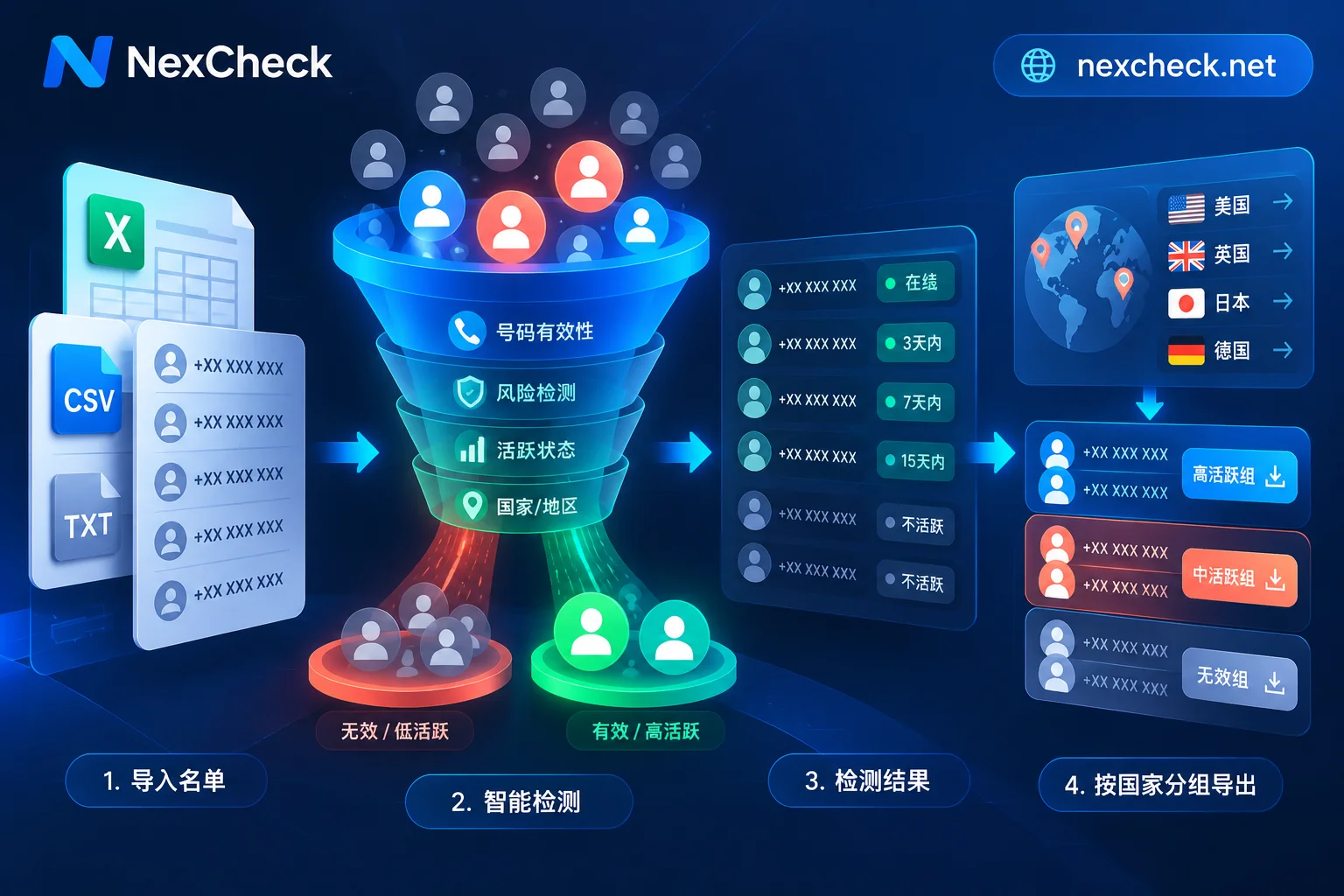
 NexCheck-筛号平台
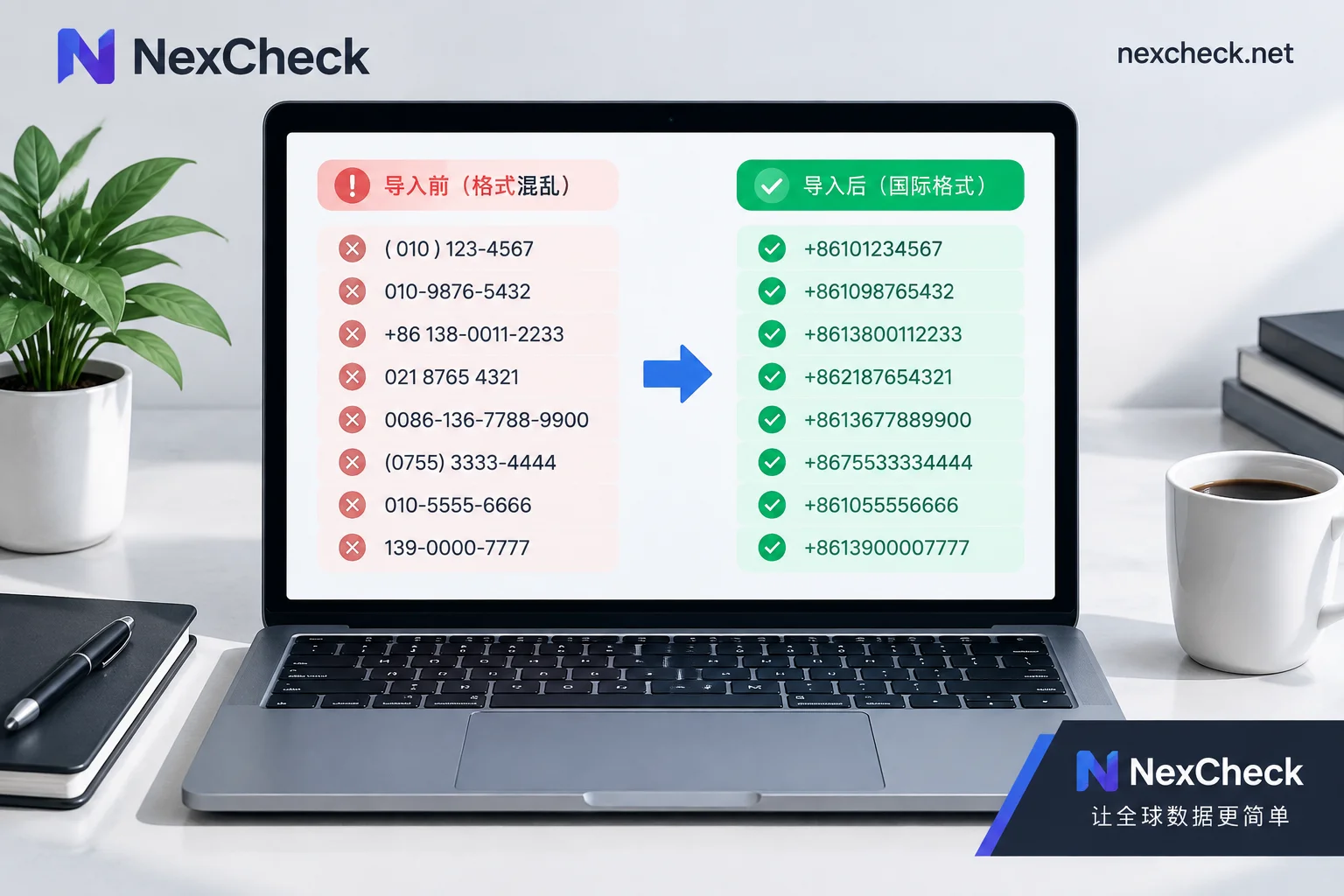
How to Standardize WhatsApp Number Format? E.164 Cleaning Order and Special Rules for Argentina and Mexico
WhatsApp requires the full international format: country code + area code + local number, with leading zeros and all symbols removed. This article explains the actual order for list processing: removing symbols, removing trunk prefixes, adding country codes, country-specific corrections (Argentina add 9 remove 15, Mexico add 1), deduplication and grouping, and which number ranges cannot register WhatsApp anyway—so format issues aren't mistaken for invalid numbers.
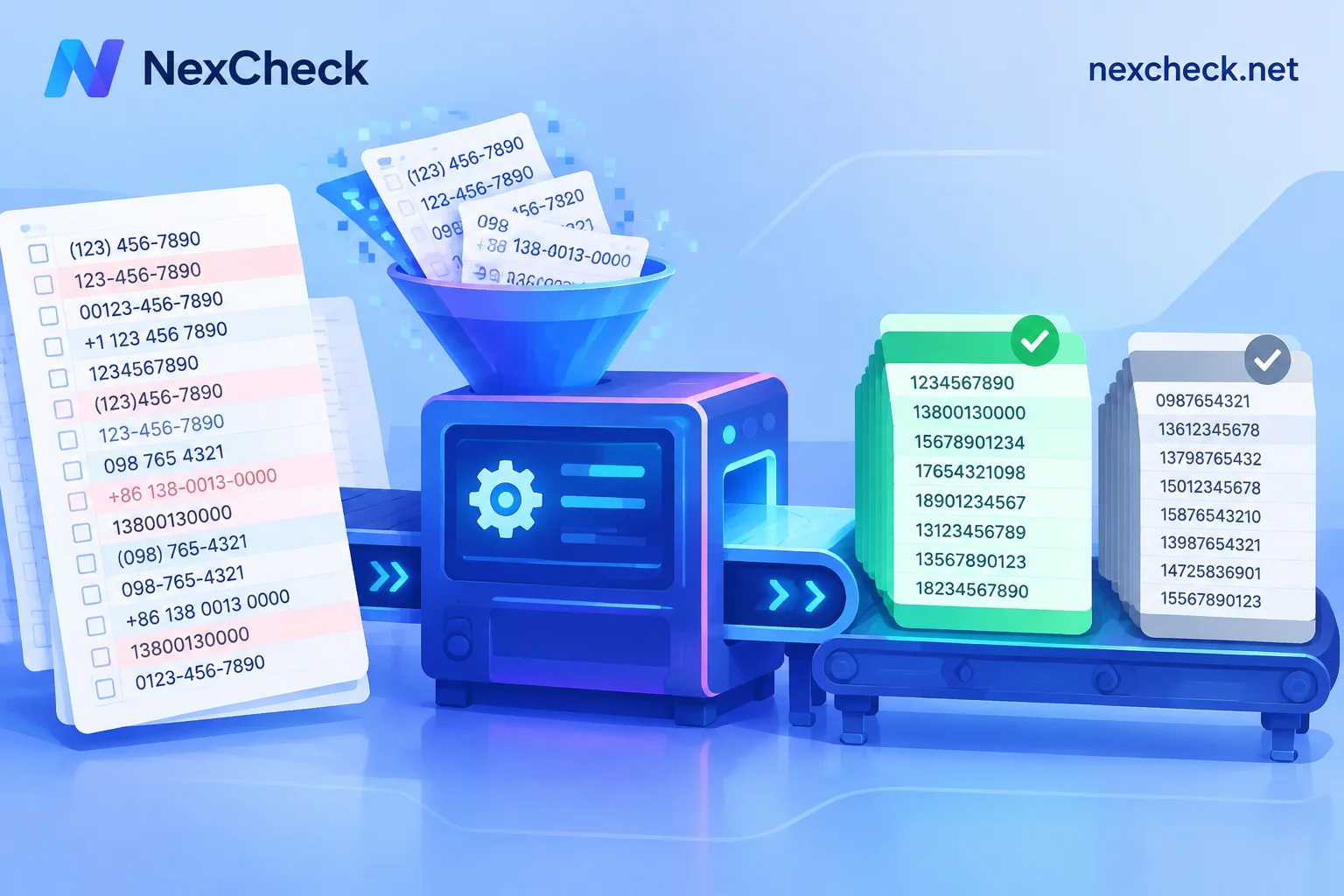
How to Filter WhatsApp Numbers: From E.164 Standardization to Interpreting Status Fields
A step-by-step guide to WhatsApp number filtering: standardize to E.164, deduplicate, split by country, run basic and platform status checks, and correctly interpret fields like profile photo, last seen, gender, and age.
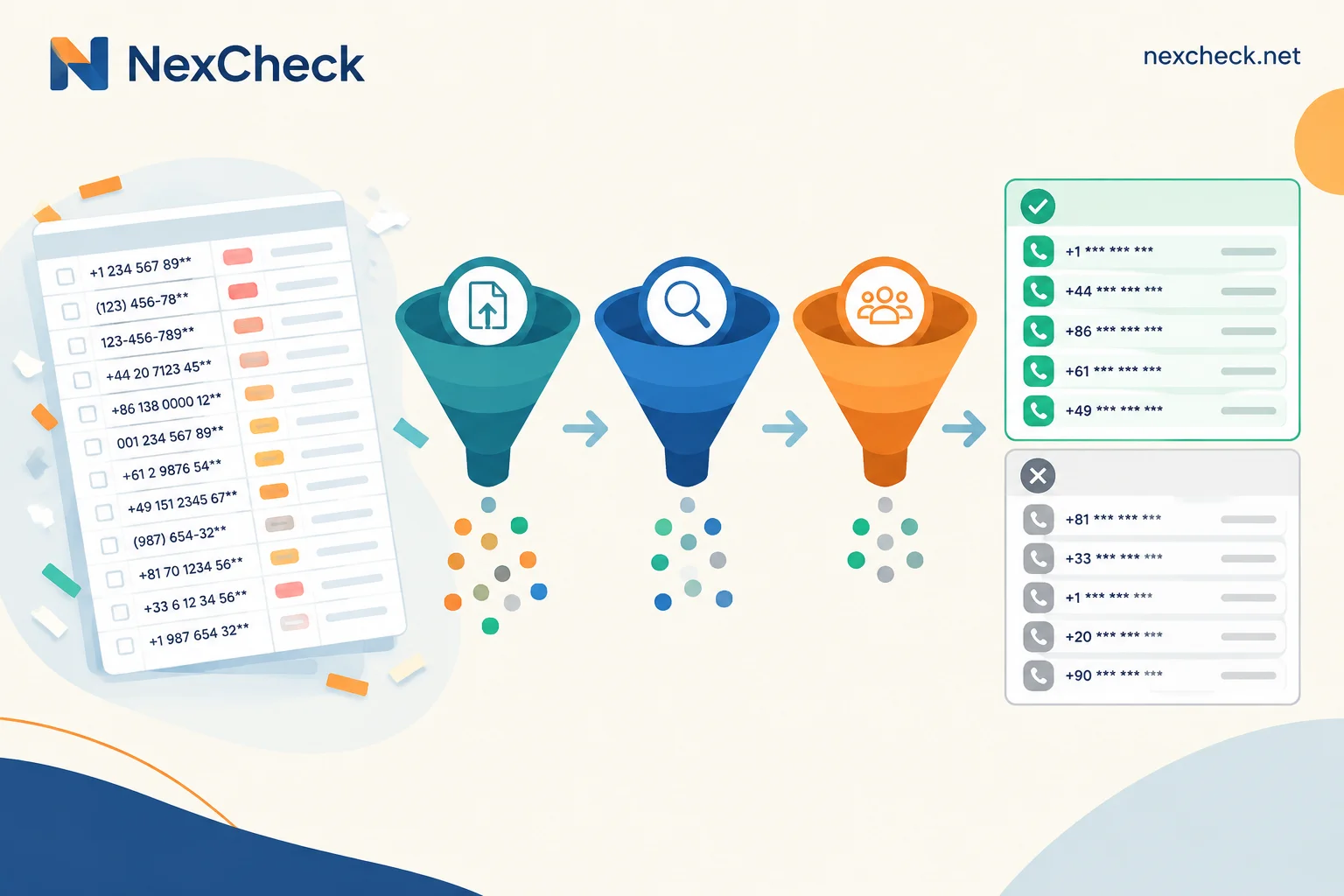
How to Detect WhatsApp Number Validity: From List Formatting to Status Field Interpretation
A complete operational order for checking WhatsApp number validity: E.164 formatting and deduplication, device type filtering, platform registration and account status detection, plus the differences between three kinds of 'not found' under privacy boundaries and how to store results in separate fields.
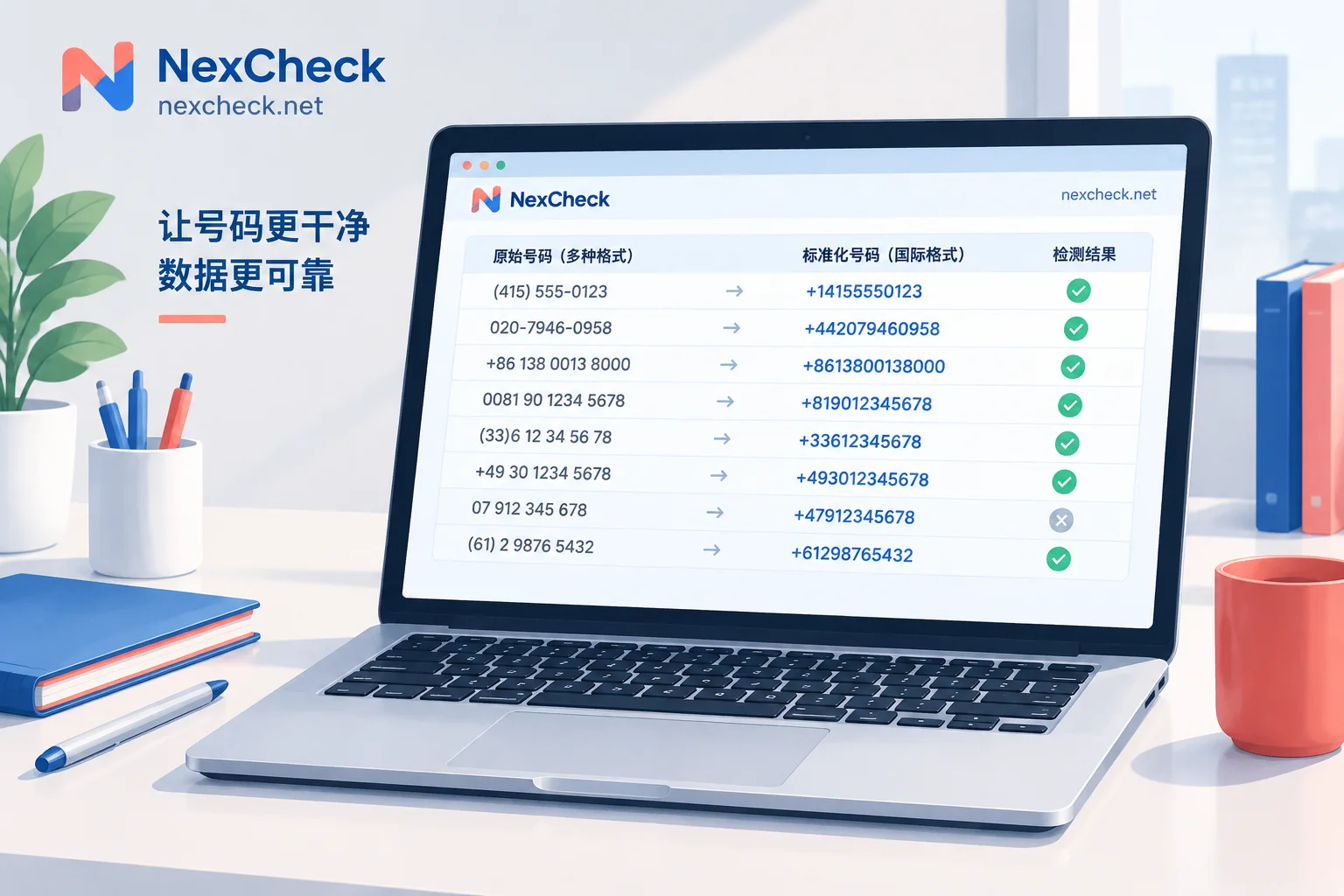
How to Batch Check if WhatsApp Numbers Are Registered? Five-Step Order from List Standardization to CRM Write-Back
To determine which numbers in a list have WhatsApp, the order matters more than the tool: first standardize to E.164, remove landlines and non-mobile numbers, then run platform registration status checks, and finally write back to the system in multiple columns. This article provides specific rules for each step, special cases for countries like Argentina and Mexico, the meaning and boundaries of returned fields, and the trade-offs between console upload and API integration.
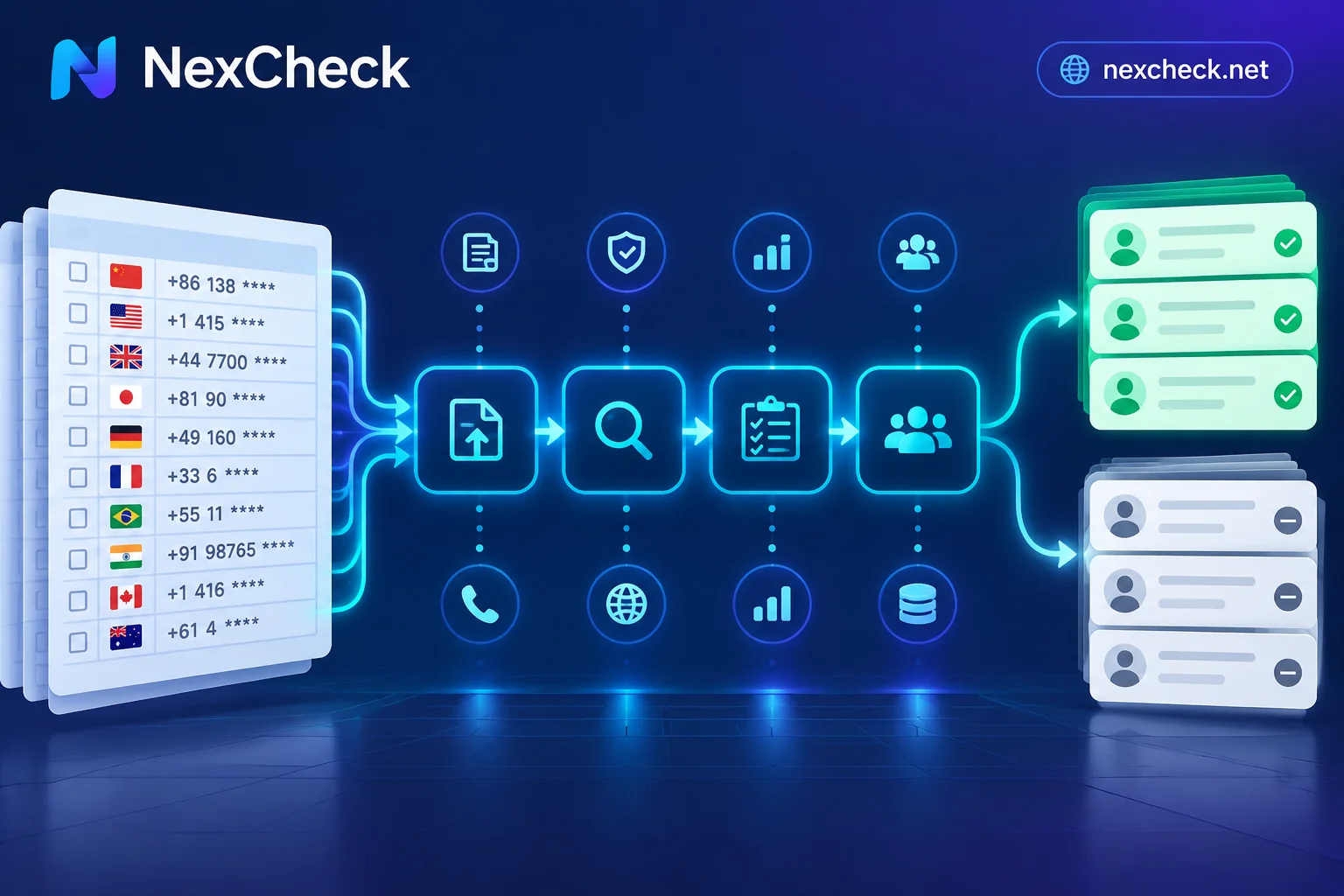
How to Do WhatsApp Number Detection: A Complete Sequence from List Cleaning to Field Interpretation
A complete guide to WhatsApp number detection: clean to E.164, deduplicate and batch by country code, run basic number checks to filter out invalid and non-mobile numbers, then submit for platform registration status, and finally store and write back results by multiple columns. The article explains rewriting rules, returned field meanings, privacy boundaries, and when to use web upload vs. API submission.