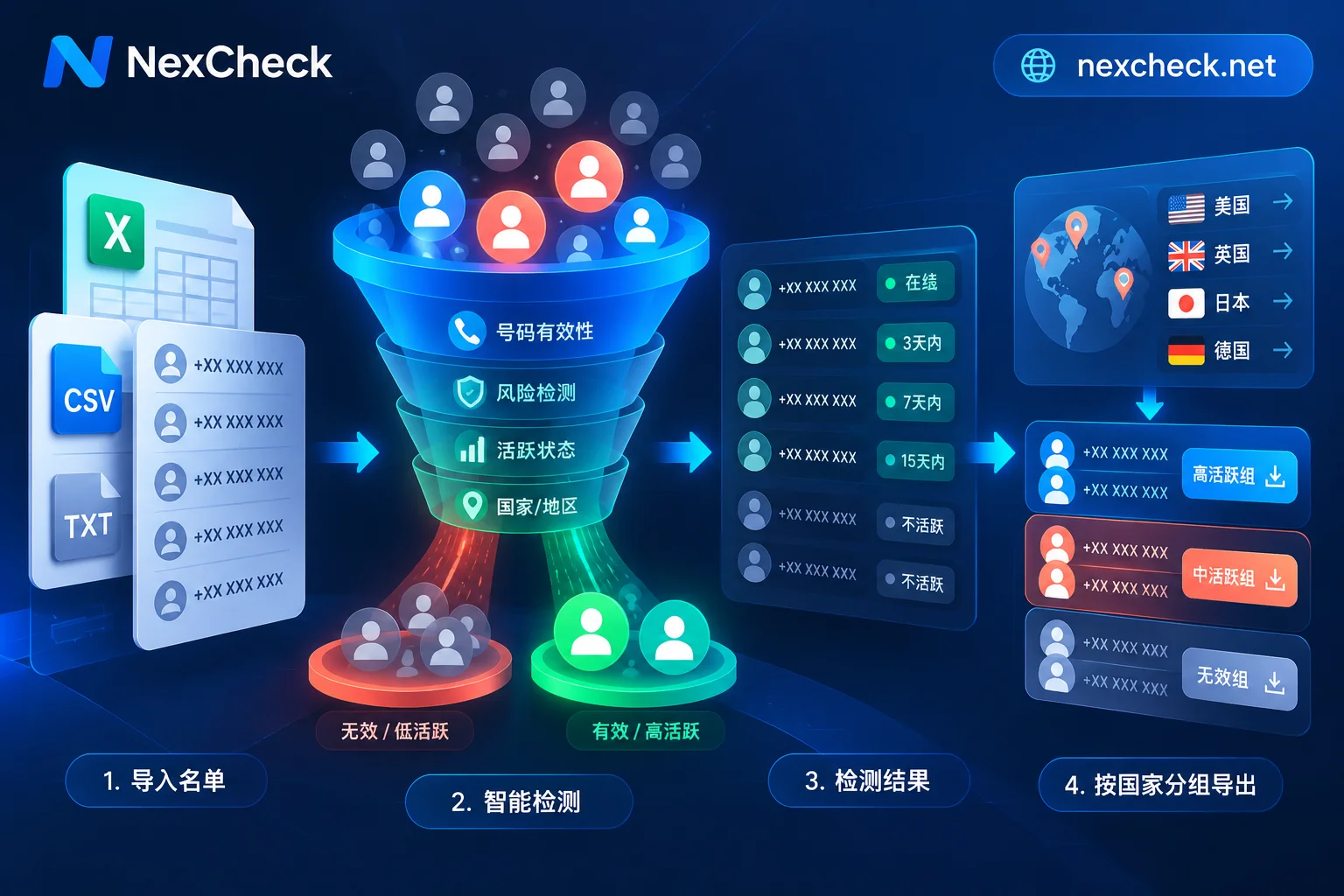
 NexCheck-筛号平台
WhatsApp Invalid Number Handling: Distinguish Three Layers, Clean, Detect, and Write Back to CRM in Order
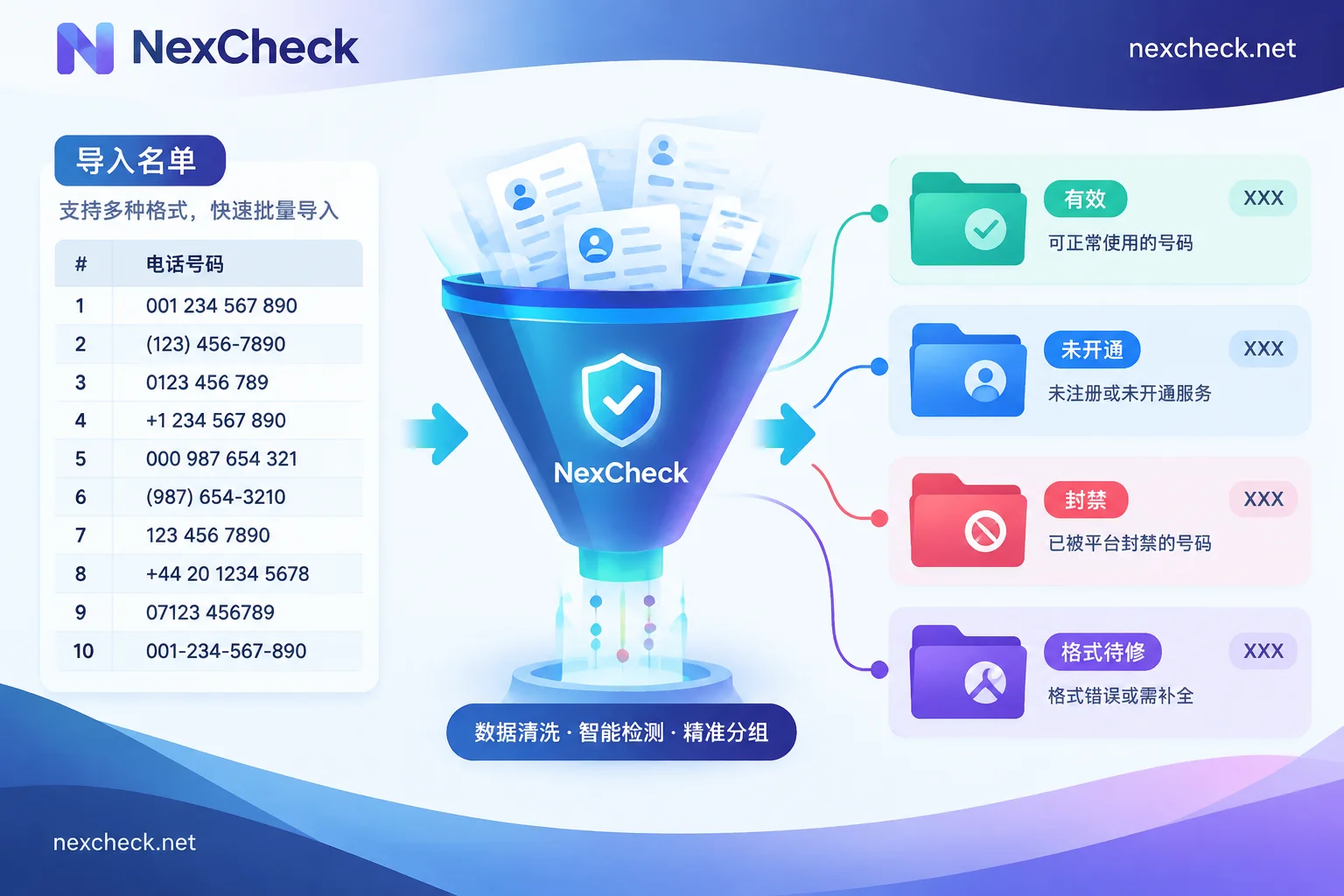
WhatsApp invalid numbers usually fall into three categories: format errors, numbers not in service, and numbers that are valid but not registered on WhatsApp or banned. This article explains the processing order: first standardize to E.164 locally, then split by country and deduplicate, then perform status detection and group by reason, and finally write back to CRM and regularly recheck. This avoids mistakenly deleting still-usable numbers and avoids paying to detect obviously incorrect data.
How to Deduplicate WhatsApp Numbers: Normalize to E.164 First, Then Deduplicate by Canonical Number
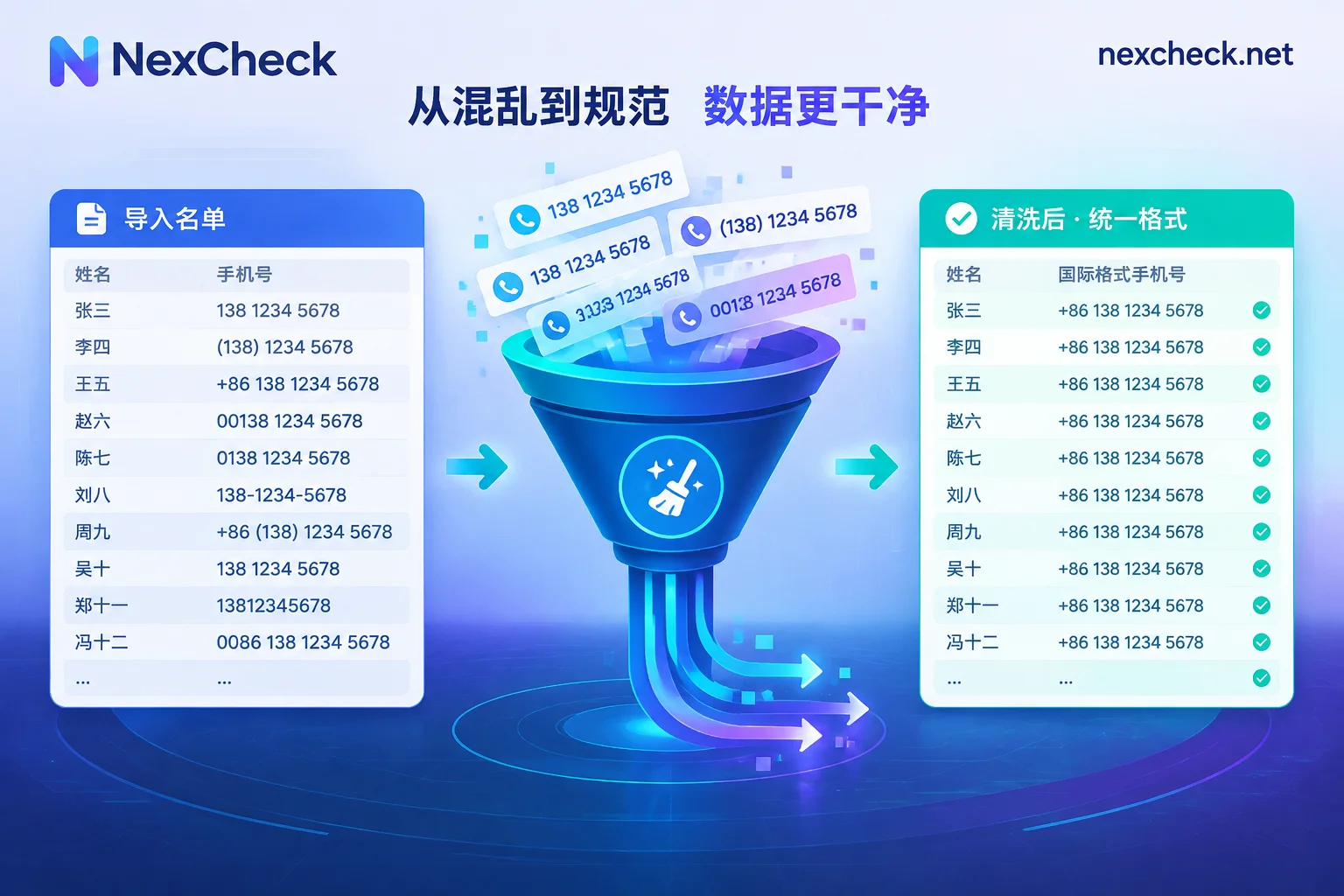
The same phone number can appear as different text forms with spaces, plus signs, 00 prefixes, or local leading zeros, so direct text comparison misses many duplicates. This article explains the practical order of operations: keep the original column, clean symbols, unify prefixes, add country codes, validate length, deduplicate by canonical number, and retain a mapping table before submitting for verification, reducing verification costs from duplicate rows and making it easy to write results back to each original record.
What's the Difference Between WhatsApp Filtering and Number Validation? Detection Layers, Processing Order, and How to Merge Results
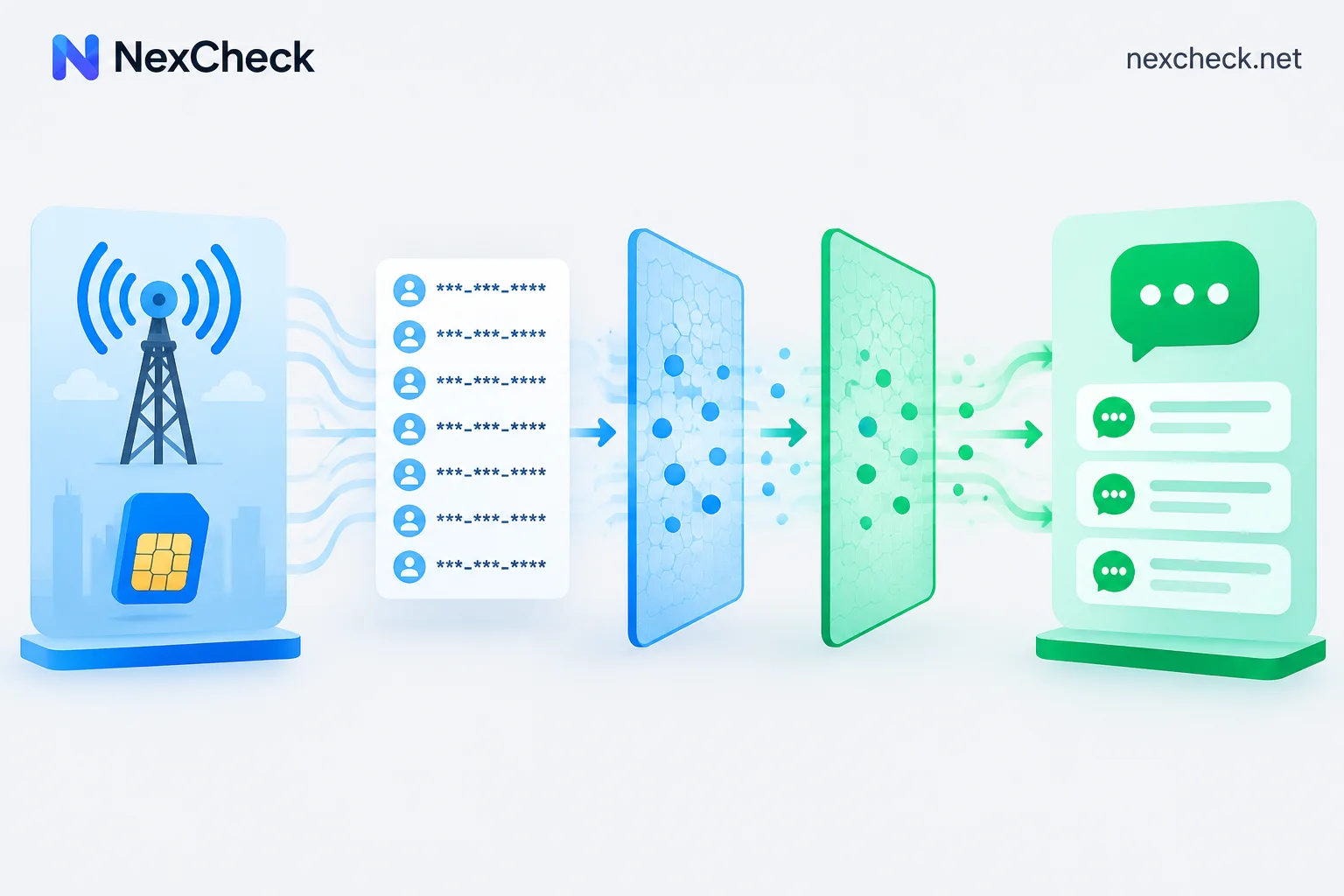
Number validation checks whether a number works as a phone number, is active, and what line type it belongs to; WhatsApp filtering checks whether the number has a WhatsApp account and what state that account is in. This article uses a customer list to explain what each checks, why one cannot replace the other, the recommended processing order, and how to tag and write back conflicting results.
How to Troubleshoot WhatsApp Number Screening Failures: Locate Errors and Misjudgments in Four Layers
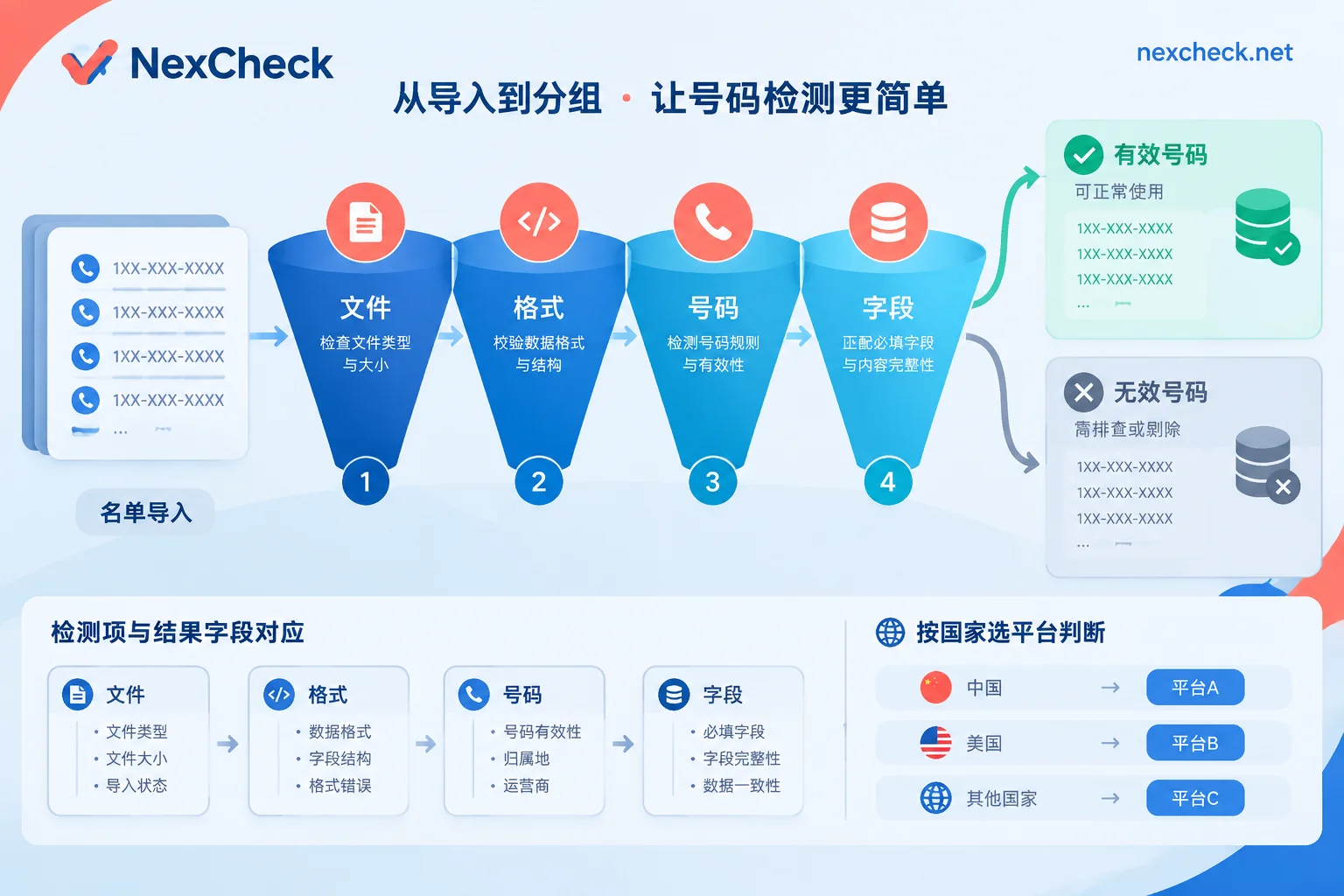
When a batch of numbers returns widespread errors, invalids, or blank fields, it's usually not the detection itself but overlapping issues in file encoding, E.164 format, number type, and privacy fields. This article breaks down each layer's diagnostic criteria, fixes, and common misjudgments in troubleshooting order.
WhatsApp E.164 Format Conversion Rules: Country Codes, Leading Zeros, and Special Encoding for Argentina and Mexico
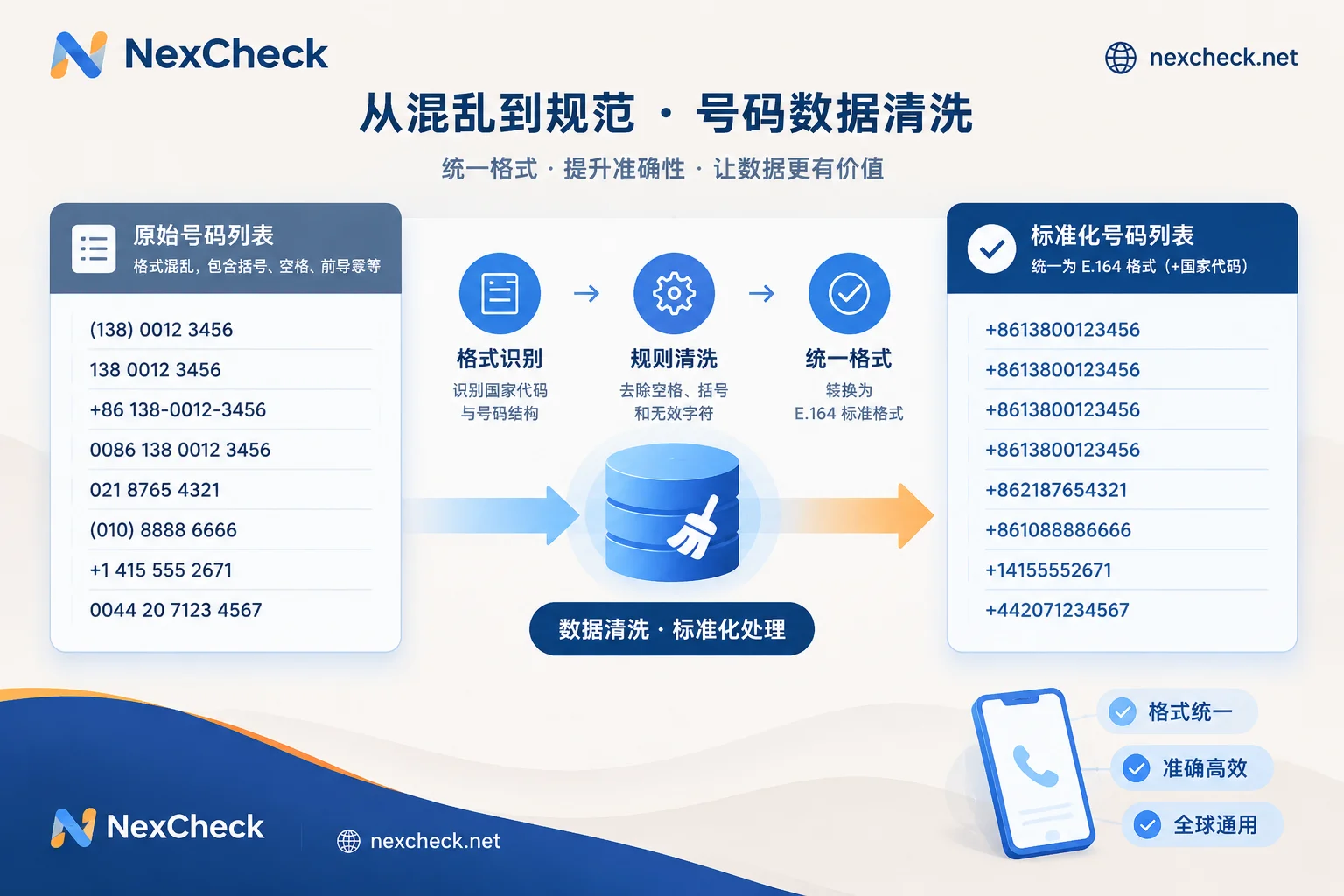
WhatsApp requires phone numbers to follow the ITU-T E.164 international standard: starting with '+', followed by a 1-3 digit country code and the local number, with no spaces or symbols and a total length not exceeding 15 digits. Standard processing requires stripping local leading zeros and 00/011 exit prefixes, but Argentina (+54) needs a 9 after the country code with the mobile prefix 15 removed, and Mexico (+52) needs to retain or add a 1. This article provides the complete cleaning sequence from raw lists to standard E.164.