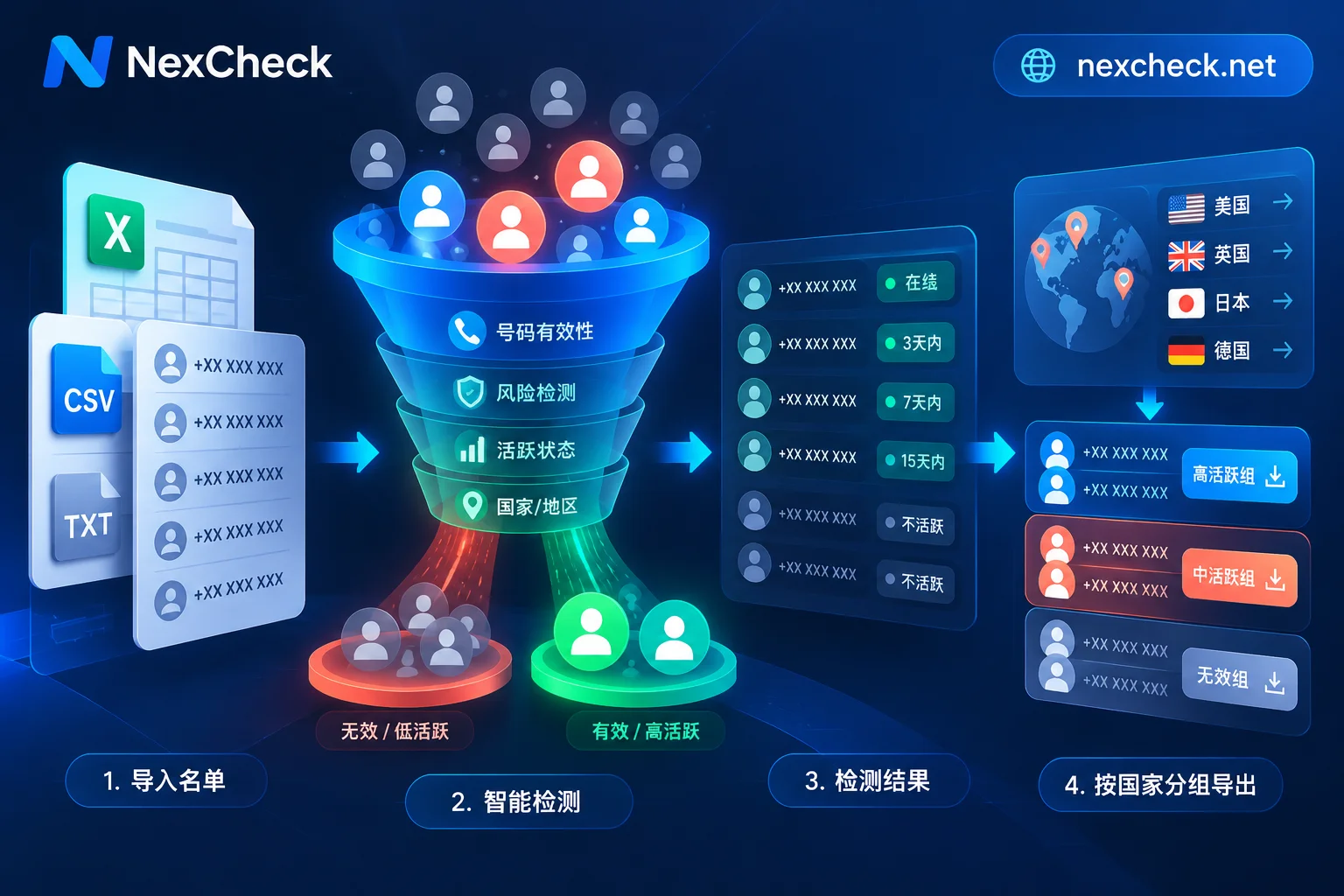
 NexCheck-筛号平台
只是一个默认分类

How to Choose a Telegram Number Screening Tool: Fields, Privacy Boundaries, Integration Methods, and Billing
When evaluating a Telegram number screening tool, check which fields it returns, how activity is represented, whether it distinguishes 'not found' from 'not registered,' if it requires mounting your account, and whether its web console, API, and billing suit your workflow; then test with a small batch.
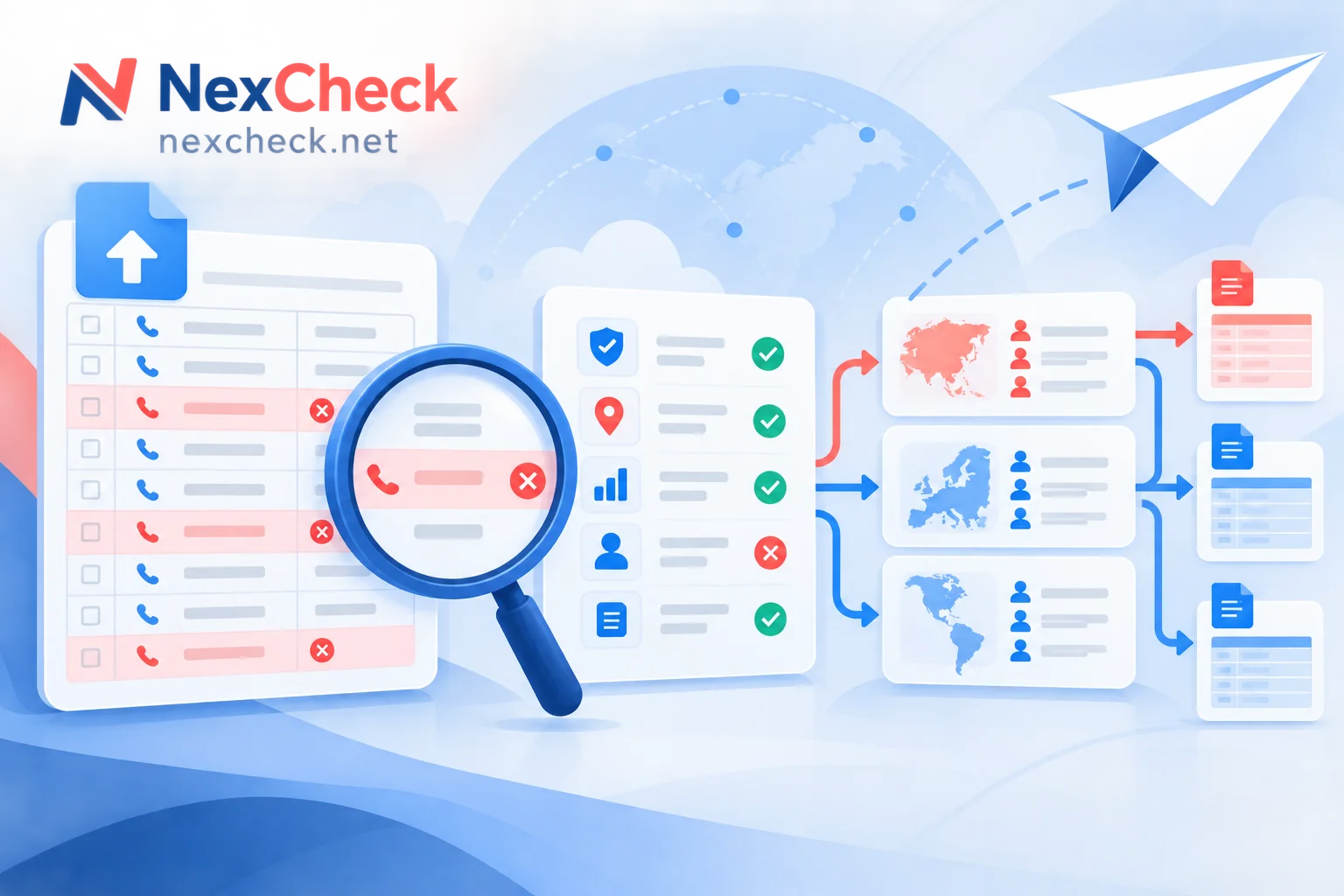
Telegram Number Screening Failures: Troubleshooting Order for Format, Privacy, Bans, and Rate Limits
When Telegram number screening produces many format errors, unmatched results, or interrupted tasks, troubleshoot in four areas: number format, user privacy settings, banned or deleted accounts, and rate limits. This article explains how to diagnose each type of problem and why "unmatched" should not be treated as grounds for deleting records when writing results back to CRM.
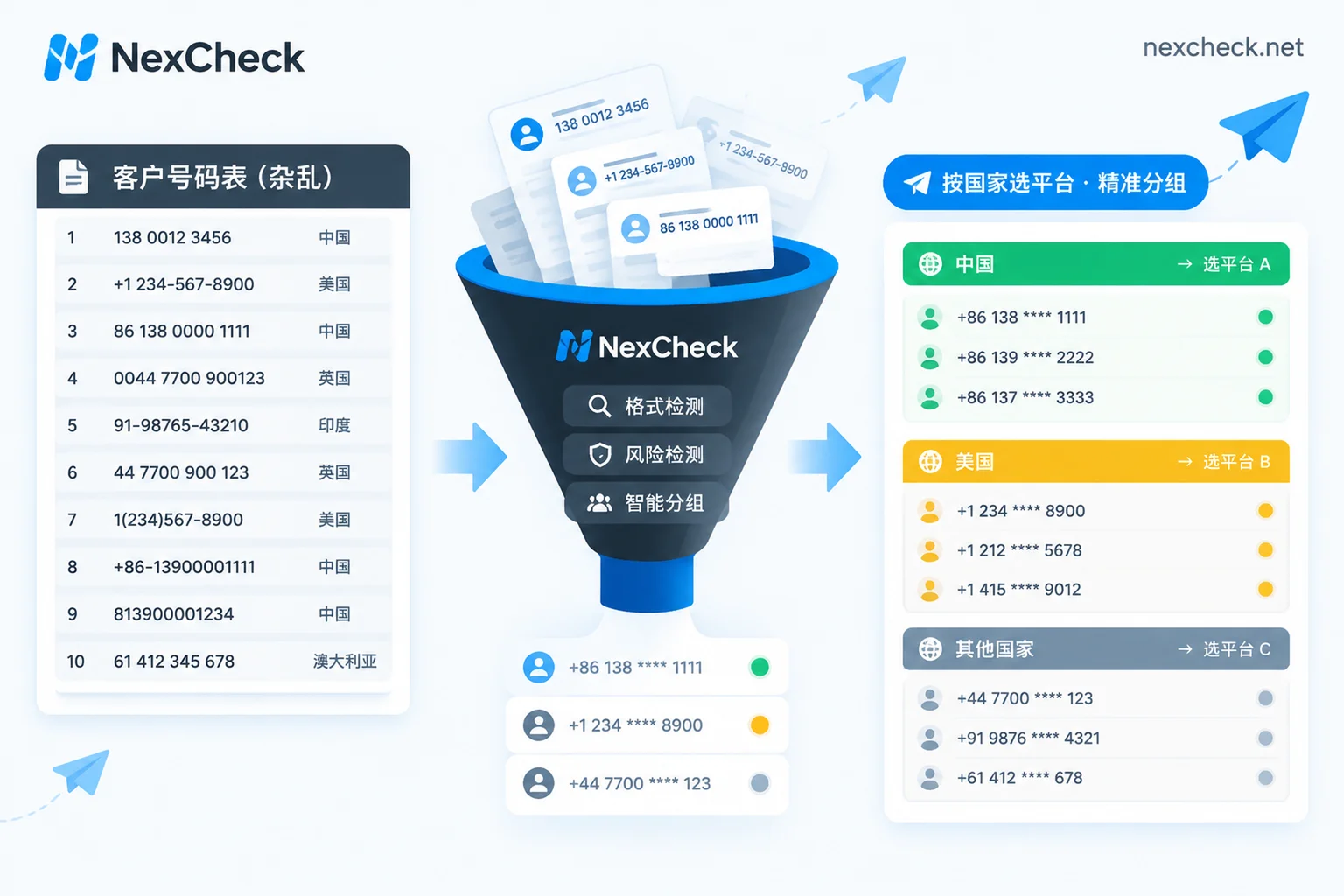
How to Clean a Telegram Customer List: Formatting, Activation Checks, Activity Tiers, and CRM Write-Back
Using a mixed-country customer list as an example, this article explains the sequence for cleaning a Telegram customer list: first unify numbers to E.164 and deduplicate, then split by country, run basic number checks and Telegram activation checks, and finally segment by Last seen ranges and write results back to CRM. It also clarifies why "not found" does not mean unregistered and how to interpret results like "a long time ago."
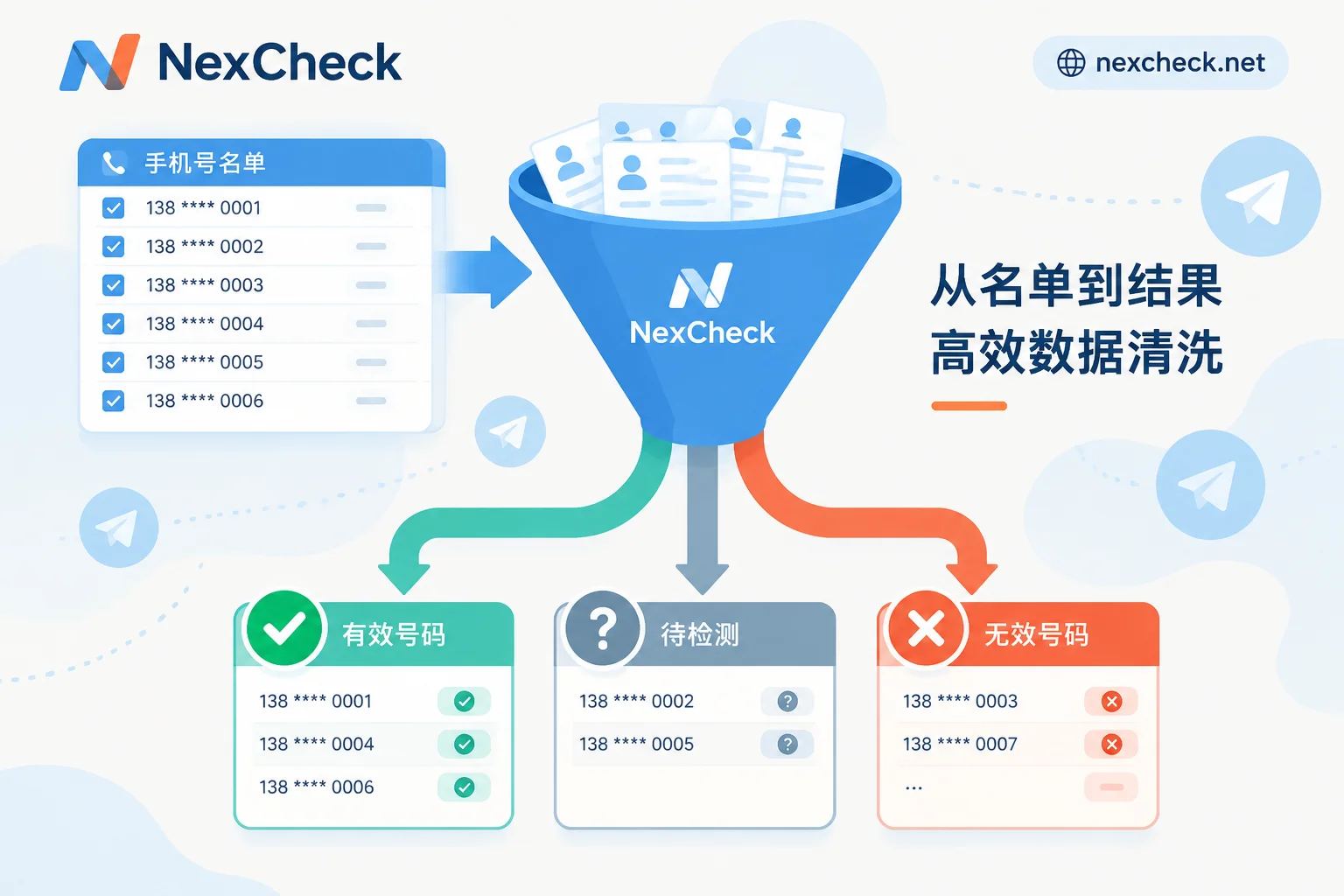
How to Filter Telegram Numbers: Processing Order and How to Classify Invalid Results
Telegram number filtering follows five steps: normalize number format, deduplicate, run basic validation, run Telegram registration checks, and write results back to CRM in tiers. This article explains what each returned field means and why privacy settings cause some registered numbers to land in the invalid group.
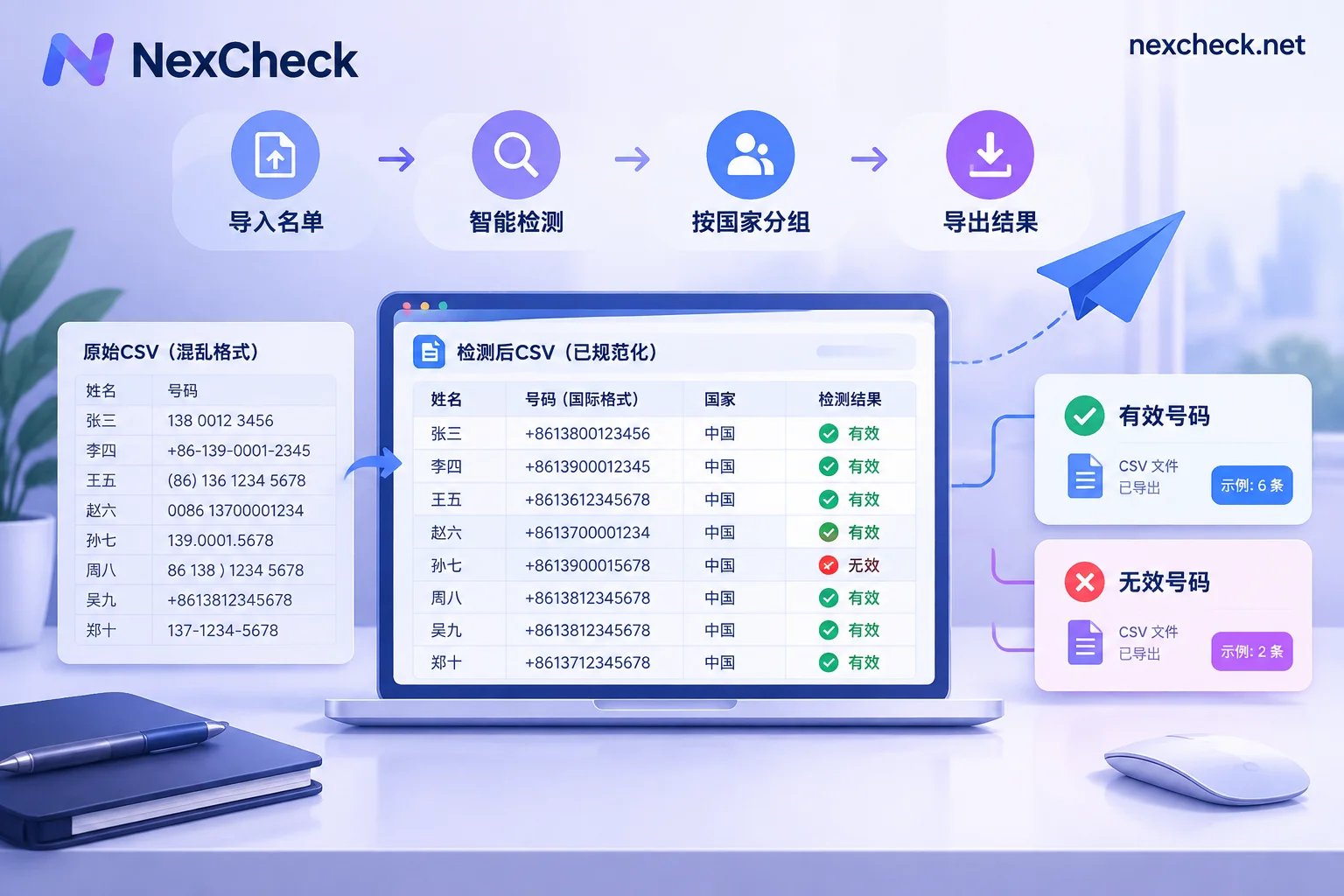
How to Filter Telegram Numbers from a CSV: List Cleanup, Batch Upload, Field Interpretation, and CRM Write-back
Using a multi-country contact CSV as an example, this article explains the preparation order before Telegram bulk checking: keep record IDs, unify to E.164 format, deduplicate after normalization, split by country into batches, and save as UTF-8. It also explains the meaning of result fields such as registered, active, and banned, clarifies the 'not found' cases caused by privacy settings, and how to write results back to CRM using record IDs.