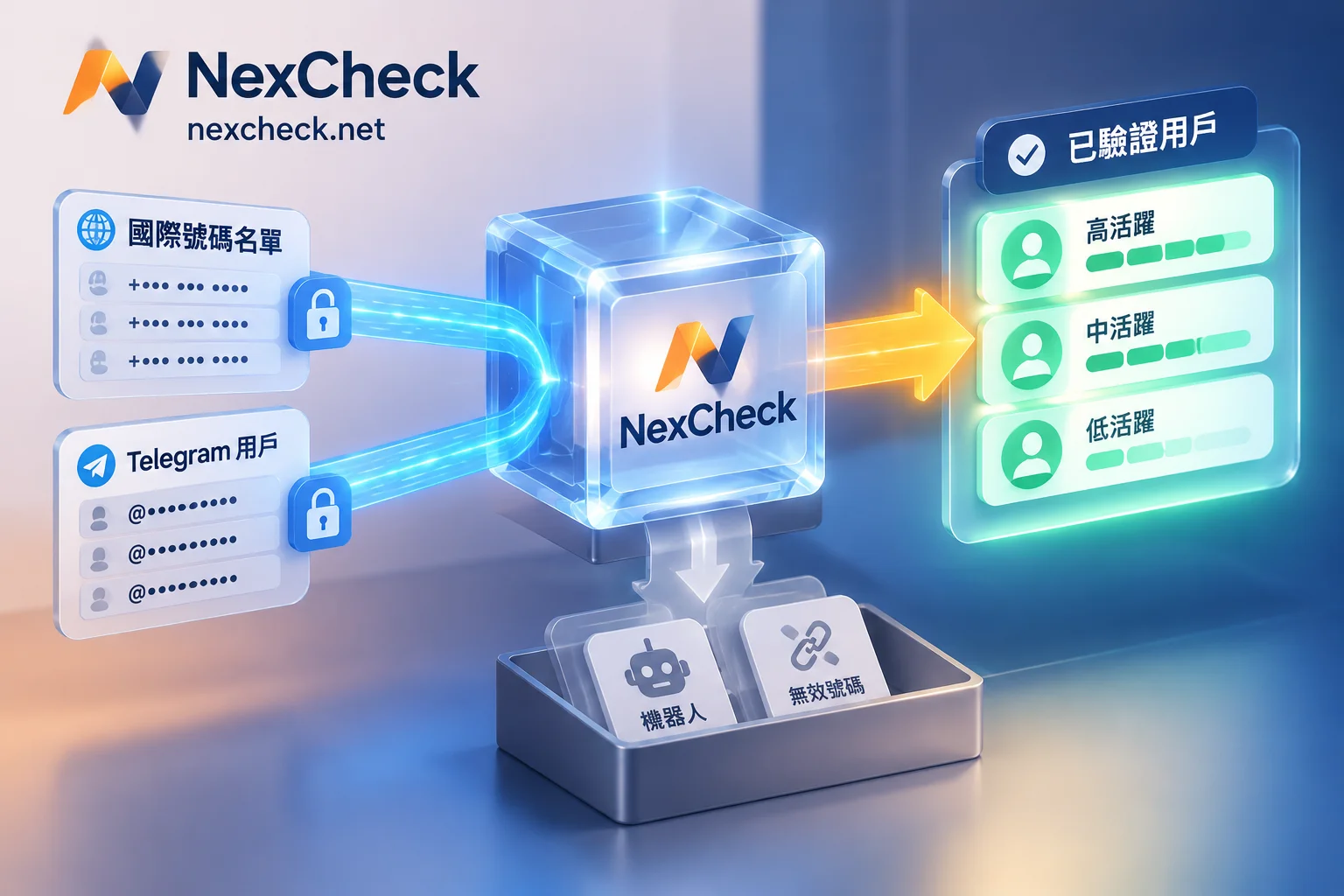
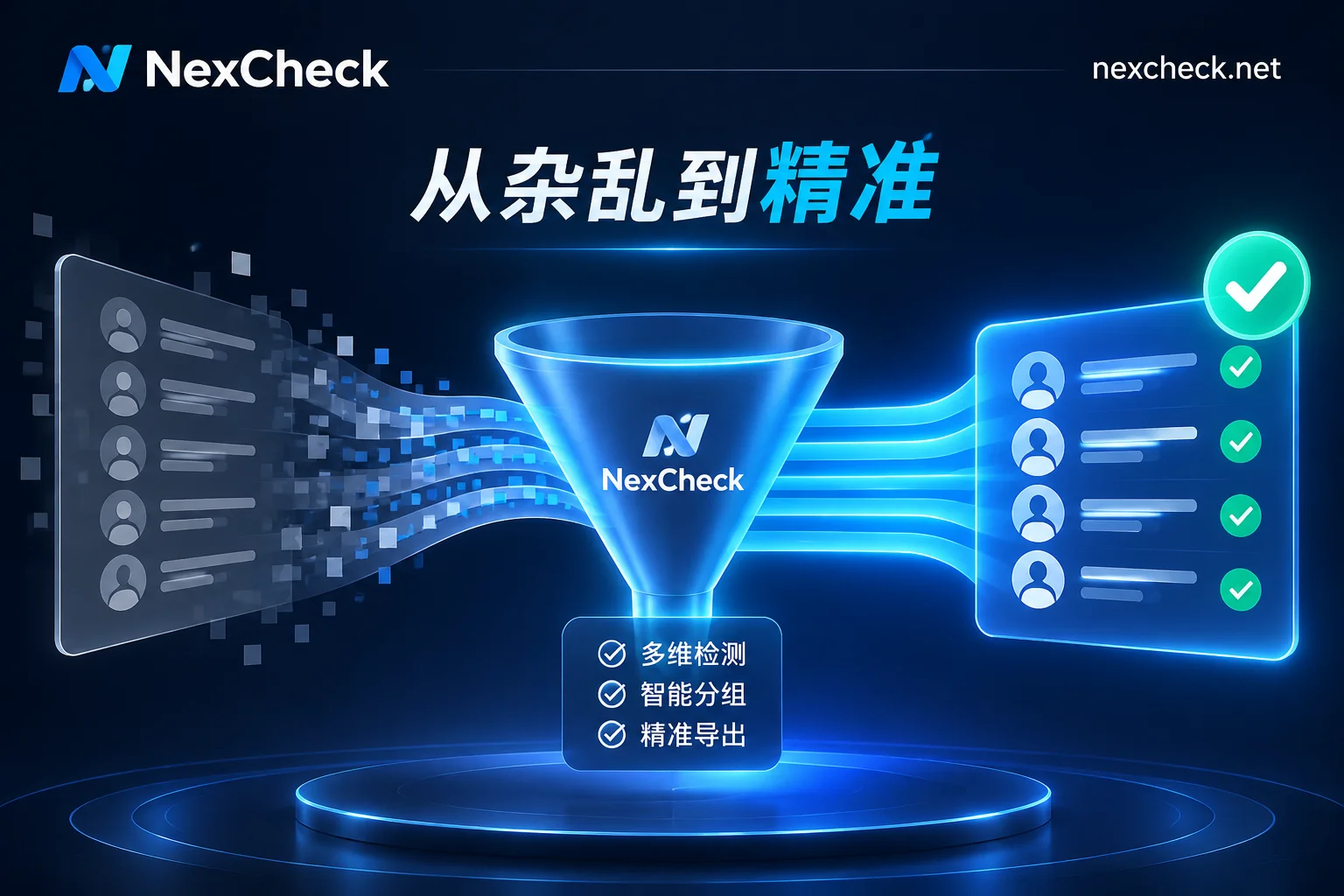
 NexCheck-筛号平台
When Telegram's global monthly active users crossed the 1 billion threshold, it was no longer just a chat tool but a main battleground for cross-border expansion, Web3 communities, fintech, and B2B business development. However, in 2026's frontline growth and private domain operations, many marketing and data teams have found that: the leads in hand are visibly increasing, but the proportion that can actually be contacted and converted is significantly declining.
This gap is not caused by a single aging list, but by two structural changes occurring simultaneously in the current Telegram ecosystem:
- The 'de-phone-numberization' interaction habit has become mainstream: With the spread of anti-harassment and privacy protection awareness, more and more real users set 'Who can see my phone number' to 'Nobody' in their privacy settings and tighten the permission of 'Who can find me by my number'. Whether at B2B exhibition check-ins, community interactions, or business negotiations, people are more accustomed to directly exchanging
@username(usernames) rather than leaving phone numbers. - Mini Apps and incentive activities spawn massive 'one-time fake accounts': With the explosion of Telegram Mini Apps, airdrop fission, and task lotteries, automated scripts and batch-registered black/gray industry accounts have flooded in. Many phone numbers or
@用户名collected from activity forms are backed by either 'wool-party accounts' that go dormant after receiving rewards, or invalid handles that are quickly deregistered or renamed due to platform risk control triggers.
This means that the past single-threaded approach of 'only taking a list of phone numbers to check if they are registered' can no longer meet current business scenarios. Today, doing Telegram number screening must be upgraded to a 'phone number + @username' dual-track parallel verification system, and the screening focus must shift from 'whether activated' to 'whether truly active recently'.
I. Why Is Your Telegram Lead Database 'Bidirectionally Distorted'?
Before cleaning the list, operations teams need to first understand the typical loss points of different data sources at hand. Roughly processing all leads into one table often wastes budget and easily misjudges valid customers.
1. Phone number lead pool: coexistence of SMS-receiving dead numbers and privacy barriers
Phone number lists from official website registration forms, historical CRM databases, ad lead forms, or offline events usually face three layers of loss:
- Underlying communication failure: Includes typos, local numbers without country codes, or empty numbers that have long been recycled by carriers.
- Not activated or abandoned: The number itself can be reached, but the owner's region is not a major Telegram market, or they have not logged in for a long time after registration.
- High-frequency risk control and self-destruction: Some virtual SMS-receiving numbers used for wool parties are banned by the platform after brief activity, or trigger Telegram's default inactive automatic deregistration mechanism.
If the raw unscreened number database is directly handed to the business team to manually search and add one by one, it is not only extremely inefficient, but high-frequency retrieval of non-existent or restricted accounts is also very likely to trigger client-side rate limits (for the underlying mechanism of such anomalies, refer to the previous troubleshooting guide: Telegram Number Screening Failure Reasons: Troubleshooting Order of Format, Privacy, Ban and Rate Limit).
2. @username lead pool: renaming broken links, spelling dirty data and bot accounts
On the other side, leads from task platforms like Gleam/Galxe, Mini Apps registration forms, social media comment sections, or B2B business cards often only have a string of @username, with no phone number at all. The pain points of such lists are equally prominent:
- Handles can change at any time: Unlike relatively fixed phone numbers, Telegram users can change or clear their
@用户名at any time. A username collected two months ago may today be an empty number, or even be preemptively registered by someone else. - High manual entry error rate: When collecting forms, users often mistake their Display Name for their username, or miss characters, add extra spaces and link prefixes.
- Lack of intuitive profile: Just looking at a string of letters and numbers
@username, it is difficult for operations staff to distinguish whether the other party is a real target audience or a batch-generated script account.
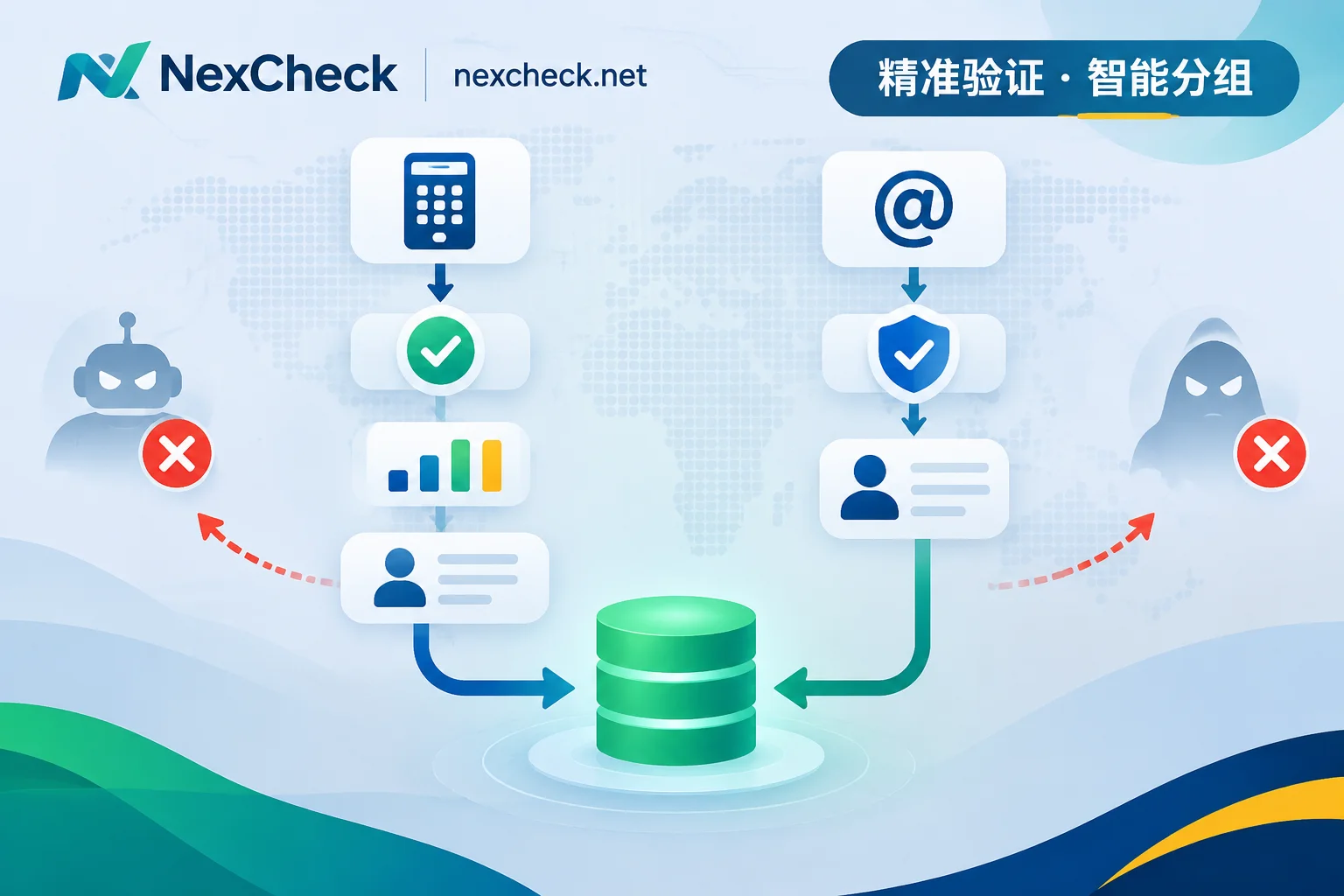
II. Dual-Track Screening System: What Core Telegram Dimensions Can NexCheck Verify?
For the two completely different data sources above, NexCheck's Telegram number screening section provides separate independent detection capabilities. You don't need to force usernames into phone numbers, nor do you need to manually click links one by one to check. Simply choose the corresponding track based on the data format at hand.
Track A: Deep verification based on phone numbers (activation + active tiering + gender)
When you have a list of phone numbers with international area codes, you can combine the following detection items according to business goals:
- Activation detection and activation format: Quickly distinguish which numbers are currently registered and activated on Telegram, return valid and invalid results in clear groups, and cut off the useless base immediately.
- 3 / 7 / 15-day active tiering: This is the core funnel for eliminating 'dead accounts' and 'sleeping wool-party accounts'. Simply knowing 'activated' is far from enough. Through active interval tiering within 3 days, 7 days, and 15 days, the team can precisely lock in high-frequency users who have truly opened and used Telegram recently (further reading: How to Do Number Activity Detection? Screening Solutions from New Delivery Threshold Rules to Cross-Platform Activity Tiering).
- Gender attribute recognition: Assists in determining the basic audience profile, providing reference for subsequent differentiated marketing copy or community diversion.
Track B: Direct verification based on @username (validity + gender/age)
When you only have a @用户名 list collected from activities or business development, you can directly upload @用户名 to perform screening:
- Username detection: Batch verify whether these
@用户名currently truly and validly exist on Telegram, clean up invalid handles with typos, deregistered, or released/renamed ones in one click, avoiding sales and BD teams wasting effort on dead links. - Username gender/age detection: On the basis of confirming username validity, further supplement reference tags for gender and age dimensions, helping the team establish a preliminary understanding of the user profile behind pure letter handles before cold start communication or community tiering.
Objective explanation on profile fields and privacy boundaries:
Telegram account profile pages themselves do not have native mandatory 'gender' and 'age' fields. Whether obtaining gender and age attributes by phone number or by@用户名, the usability of such results depends on the name and avatar information publicly set by the user; for profile fields set as private by the user, no compliant tool can read them. At the same time, detection results reflect the platform's objective state at the moment of query, used to assist data tiering, and do not represent an absolute judgment of the holder's true identity or business intention.
III. From Raw Messy Tables to High-Net-Value Tiering: Four-Step Practical Process
In actual business, standardizing the screening action can help the team save a lot of hidden costs of rework and repeated charges. Here is the recommended four-step implementation order:
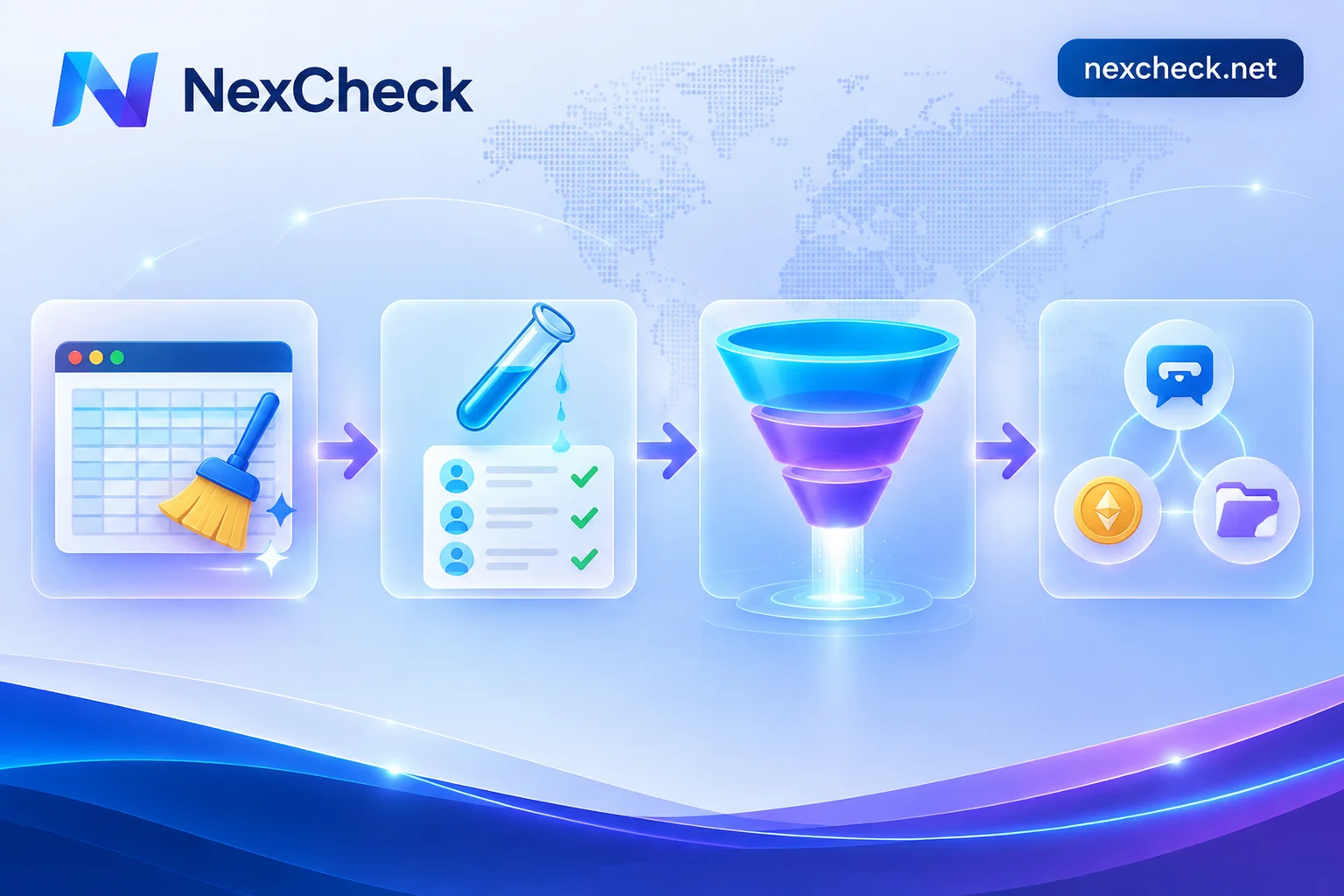
Step 1: Local format alignment and pre-deduplication (zero detection cost)
Special attention: The NexCheck console does not automatically deduplicate after file upload; duplicate rows will still be detected and charged as usual. Therefore, cleaning before upload is essential.
- If you are processing phone numbers: It is recommended to uniformly convert to
E.164standard format with country code (detailed rules see How to Write Telegram Number Format: E.164 International Format, Leading 0 Processing and Multi-Country List Organization Order). You can directly use the free NexCheck Online Number Cleaning Tool—it runs entirely in the local browser, does not create paid tasks, can automatically identify common separators, fill in country codes according to the selected default country, convert to E.164 format and complete deduplication, while intuitively reporting valid, invalid and duplicate counts (note: be sure to select the correct default country, otherwise it will produce format-compliant but wrong-attribution numbers). - If you are processing @usernames: In the local table (CSV / TXT / XLSX), uniformly organize the target values into the first column, one per line, first use the table's built-in remove duplicates function to eliminate duplicate records, and clean up obviously mixed Chinese notes or blank lines.
Step 2: Small batch sampling to confirm channel specifications
Lead quality varies greatly by region and source. Before formally running a large list of tens of thousands or even hundreds of thousands, it is recommended to first follow the Quick Start Manual file specifications (note the single file size, row limit, and the minimum/maximum quantity range of the selected detection item itself; number-type items require accurate selection of the corresponding country or region), and sample a small batch of data for actual testing.
NexCheck adopts a prepaid pay-per-item model, charging when creating a task, and automatically refunding in full if the task fails, which is very suitable for using a small cost to first find out the 'effective rate bottom card' of the entire batch of leads.
Step 3: Cleverly use the console's 'Continue Detection' for progressive funnel
Don't run the most granular combination items on the entire raw data package right away. A more cost-effective approach is progressive steps:
- For phone number lists: First run the basic 'Telegram Activation Detection' (if the number source is very mixed, you can even first filter out empty or powered-off numbers in the Number Basic Detection Matrix). After getting the results, directly click 'Continue Detection' in the console, use the 'screened' valid numbers directly as input for the next round, and create a new task to run '3/7/15-day active tiering' or gender detection.
- For @username lists: First run 'Username Detection' to eliminate invalid handles, then through 'Continue Detection' add 'Username Gender/Age Detection' to confirmed existing usernames.
(Note: 'Continue Detection' will create a new independent task based on the selected results and charge separately, but because a large number of invalid bases are cut off in advance, the overall investment is much less than full blind testing.)
Step 4: Cross-ecosystem verification to identify high-net-value people (advanced tactic)
In crypto finance, cross-border trade, or high-ticket service scenarios, single-platform activity is sometimes not enough to filter out sophisticated studio accounts. At this time, using NexCheck's Multi-Platform Support Overview for cross-ecosystem verification often yields miraculous results:
- Web3 and crypto finance teams: For phone numbers screened as 'Telegram 3/7-day active', you can cross-verify through 'Continue Detection' whether they are also activated on Binance (Binance detection does not log into Binance, does not send any verification code to the target number, and even supports verifying whether the recipient of a Binance Pay transfer channel exists), KuCoin, or CoinW and other trading platforms. Numbers that are simultaneously active on communication terminals and have real crypto platform registration status have far higher gold content as real traders than ordinary airdrop accounts.
- Multi-channel overseas marketing teams: If a batch of numbers is not activated on Telegram (common in some European, American, or Southeast Asian niche markets, you can check Regional Screening Solutions to understand the main ecosystems of each country), don't discard them directly. You can conveniently transfer them to WhatsApp Screening or Viber Screening to find alternative contact entry points, maximizing the activation rate of each lead.
IV. How Do Cleaning Results Drive Business and CRM Automation?
After completing detection, it is recommended that the team develop the habit of timely downloading and exporting and archiving to their own database (the console task center is only for recent result preview and export, not suitable as a long-term archive cloud drive). After obtaining data clearly grouped by valid/invalid, you can formulate clear operational actions according to activity gradients:
| Lead tiering result | Typical user status | Recommended business processing strategy |
|---|---|---|
| Activated + 3/7-day high-frequency active (or valid @username + complete profile) | Current core heavy users, highest message open rate | Include in core follow-up pool, prioritize assignment to key account managers, VIP community invitations, or high-value activity pushes |
| Activated + 15-day active / regular activation | Low-frequency users or marginal users in a wait-and-see period | Include in regular nurturing sequence, cooperate with email or other verified activated social media channels for gentle awakening |
| Not activated / @username invalid | Number not using TG, renamed/deregistered, or filled in wrong information | Immediately remove from Telegram outbound/contact queue; if phone number, can divert to detect other main IMs |
Developer extension: Integrate screening capabilities directly into business flow
If your team continuously has official website registration leads, Mini App form submissions, or overseas exhibition entry data every day, manually uploading tables repeatedly is obviously not agile enough. NexCheck provides a standard RESTful API, supporting batch submission, real-time single query, and asynchronous Webhook callback (for architectural ideas on CRM automatic interception and write-back, refer to How to Integrate Telegram Number Screening API: List Cleaning, Asynchronous Submission, Result Fields and CRM Write-Back).
Since the public manual does not include specific API parameters and authentication details, R&D teams with automation integration needs can register a free NexCheck account and then directly contact official Telegram customer service (@nextipkf) to obtain complete API integration documentation and technical support.
V. Data Security and Compliance Bottom Line
For any marketing and operations team holding core customer assets, the biggest concern about uploading lists to a third-party platform for verification is 'data collision' or 'list leakage'.
In terms of data ownership and security boundaries, NexCheck follows strict isolation principles (see Privacy Policy for details):
- Customers fully control data: The phone numbers or
@用户名lists you submit always belong to your own business assets. The platform only processes data within the scope of executing the detection tasks you initiate, never sells externally, and will not use customer lists to build a public number database for external sales. - Self-controlled viewing and destruction: After task completion, customers can view, export results at any time in the console, and actively delete historical task data.
- Legal and compliant premise: As the data controller, customers must ensure that the acquisition sources and subsequent business uses of the submitted lists are legal and compliant, and do not submit information of others that they have no right to process. It should be clear that NexCheck focuses on account status and attribute screening, does not provide mass messaging, SMS receiving, or account trading services. Decoupling data verification from marketing execution can also make the enterprise's compliance architecture clearer and more controllable.
Conclusion
Today, when users are hiding phone numbers and walking in communities with @username, while automated fake accounts are constantly diluting the traffic pool, Telegram growth has long bid farewell to the blind mass-sending era of 'big effort produces miracles'.
Put phone numbers into the funnel of 'activation + 3/7/15-day active tiering' for purification, put @用户名 into batch validity verification to remove the false and keep the true, and then supplement with necessary cross-platform verification—this dual-track screening action is essentially installing a low-cost 'calibration valve' for the team before every investment of sales hours and marketing budget.
If you are currently holding a batch of overseas phone numbers to follow up or @用户名 lists collected from activities, why not now go to NexCheck to register an account, first use the Number Cleaning Tool to do local standardization, then enter the Telegram Number Screening Page to run a small batch actual test, and see for yourself how many truly active golden customers are hidden in your lead database.